GENEALOGICAL DETAIL
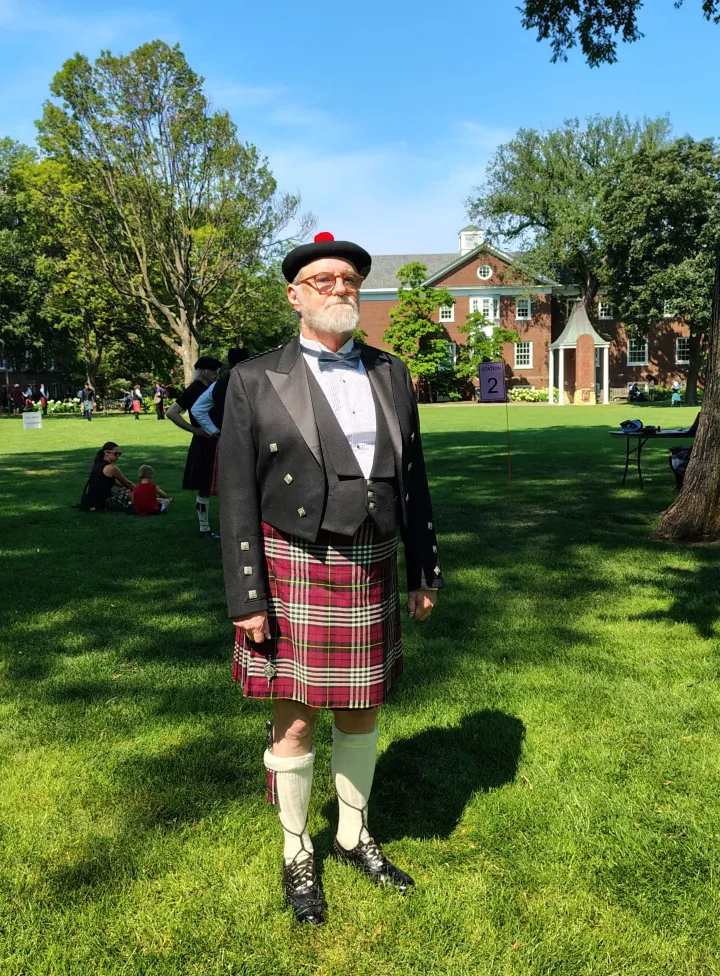
My DNA has been analyzed by Family Tree DNA and the YFull Corporation. Guanine was found at location 14080114 (Hg38), where Adenine was expected. This mutation identifies the SNP {Single Nucleotide Polymorphism) named R-Y95564. Only a few others with this specific anomaly have been tested to date: the closest match being Thomas R. Little of Florida. Family records suggest that he is descended from a Thomas Little who was born near Bentpath, Eskdale in the Borders Region of Scotland in 1740. Thus, it seems likely my background is in that area, also.
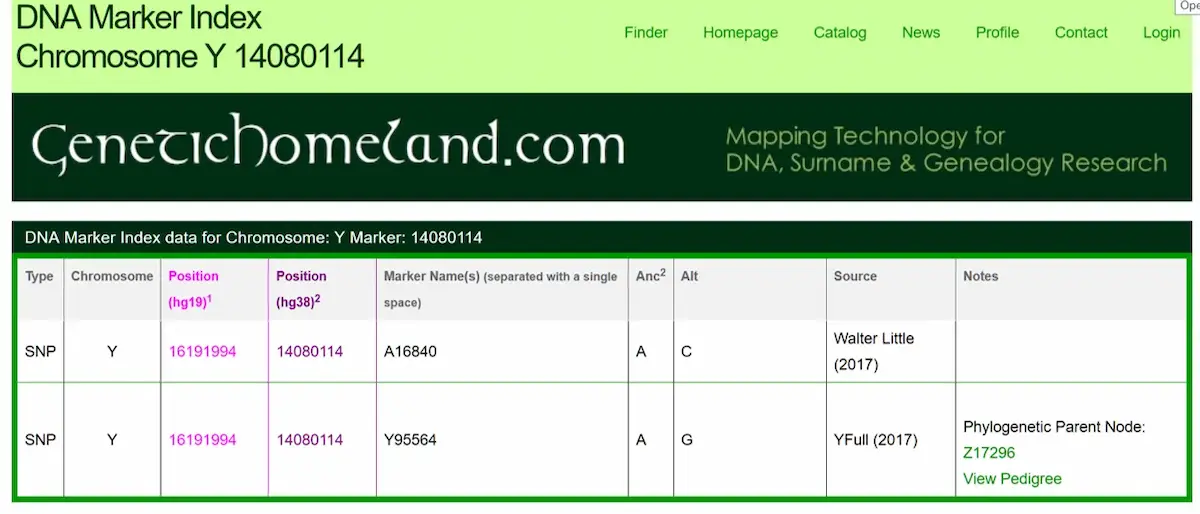
This qualifies me as a member of the Clan Little Society, of which the afore-mentioned Thomas R. Little is currently Steuart (president) as of 2024. The Society was established in 1991 by the late James Crawford Little, affectionately known as "Dr. Johnnie." He was a psychiatrist in Dumfries who was granted a small patch of land on the Scottish Borders by the Duke of Buccleuch, and was proud to wear the title Dr. J. C. Little of Morton Rigg (a minor noble). It was he who designed the association's tartan and secured the approval of the Lord Lyon to register it.
The legitimacy of a Clan Little follows from a 1426 document in which James I confirmed the 1410 grant of the lands along Ewes Water to his "beloved and faithful Simon Lytil." Simon is presumed (very speculatively) to be a relative of "Eduuard Little," a character described by ancient poet Blind Hary as a nephew of William Wallace who fought beside him in 1296. The lands granted to Simon had been taken from the Alexander Fraser family, who had supported the wrong side in a battle. Sometime in the mid 1240s, Sir John Fraser had acquired those lands through marriage to the daughter of Sir William de Kunyberg, whose family had held the land since record-keeping began.
But the earliest "Little" ancestor about whom I know anything at all is my great-great-grandfather. I know that his name was "James Little" and that he was a farmer. That's all I know about him. I only that much because that is how he was described in two different documents concerning his son (my great-grandfather), also "James Little." To begin the story, it might be good to mention the marriage that seems to have gotten him some/much of his land.
Rachel
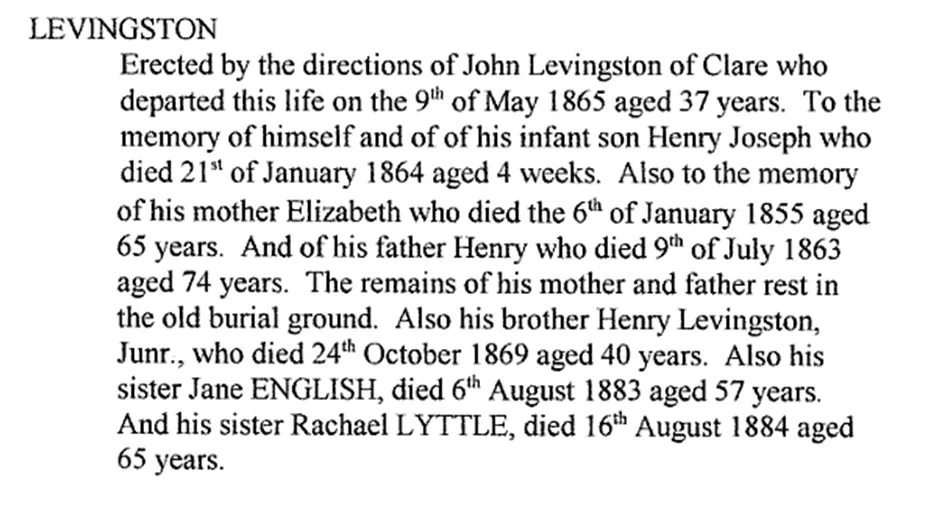
Henry Levingston (b. 1789, d. July 9 1863) lived in the Townland of Clare (near Craigavon), part of Tullylish parish in County Down, Northern Ireland. He and his wife Elizabeth (b. c. 1790, d. Jan 6 1855) "had issue" -- produced the following children -- Rachel (b. c. 1819, d. Aug 16 1884), Jane (b. c. 1825, m. John English, d. Aug 6 1883), John (b. c. 1828 d. May 9 1865), and Henry, Junior (b. 1829, d. Oct 4 or 24 1869). Henry's daughter Rachel married Stephen Hamilton on February 27, 1842, when she was about 23.
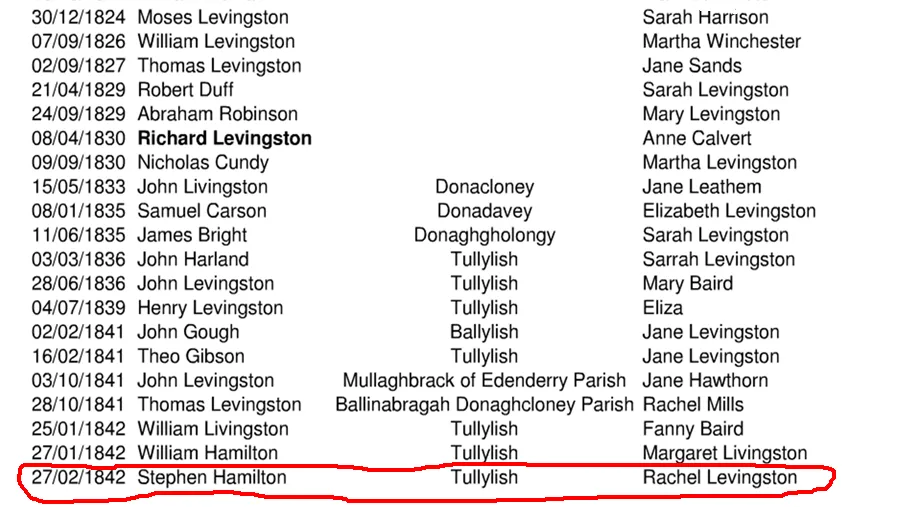
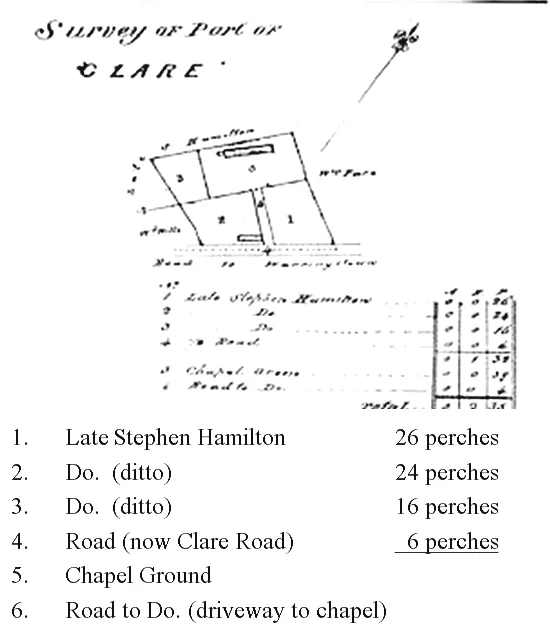
When Stephen's brother Alexander died on August 12, 1847 at the age of 26, he was buried by his father. Stephen Senior must have died not long after that, according to the following record from St. Colman's (Catholic) church, mentioning Rachel's mother-in-law who sold the gardens and the land around the current St. Colman's (Catholic) church to what was then called "Clare Chapel" to serve as its cemetery. That the ancient site of a "mass rock," around which people had gathered to pray for many decades.
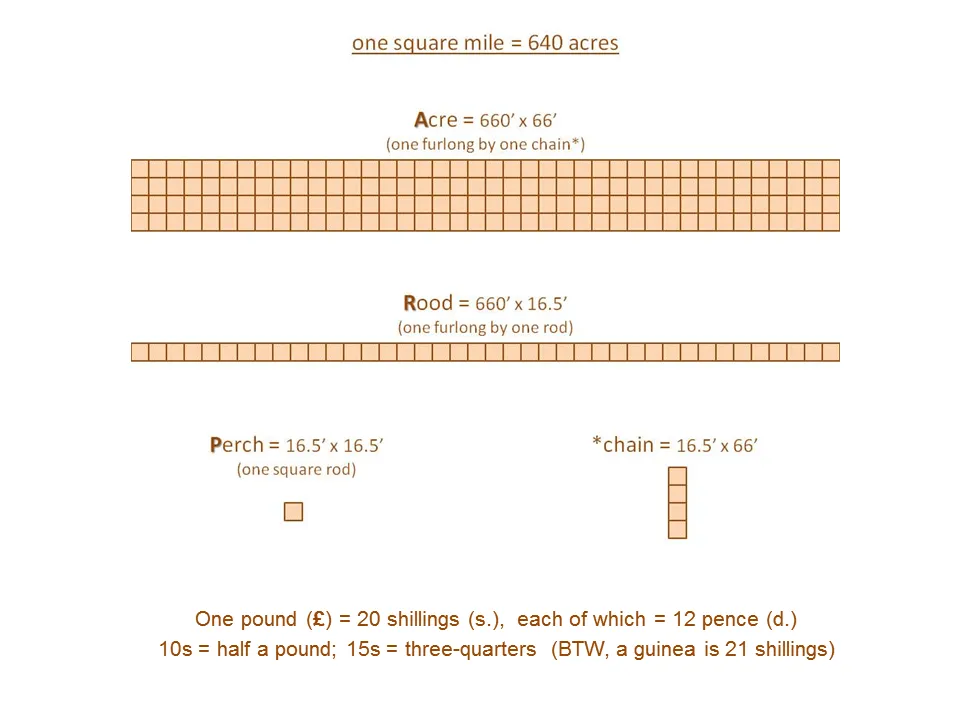
"Memorandum of Settlement between the Revd John Byrne, Patrick Campbell and Patrick McConville on the part of the committee of Clare Chapel and Sarah Hamilton relict of the late Stephen Hamilton, Clare. The said Sarah Hamilton has this day sold her interest in and given possession of the premises consisting of three gardens containing by measurement 1 rood 32 perches and two houses on said ground adjoining the Roman Catholic Chapel of Clare in consideration of which she received from the above named persons on behalf of the committee the sum of £40 sterling.Dated March the 17th 1854.Witnesses Present: John McKeown and W Dickson."
Stephen Junior, in turn, seems to have died sometime before 1858. Rachel was already described as a widow on August 6, 1858 (at 39 years of age) when she married my great-grandfather.
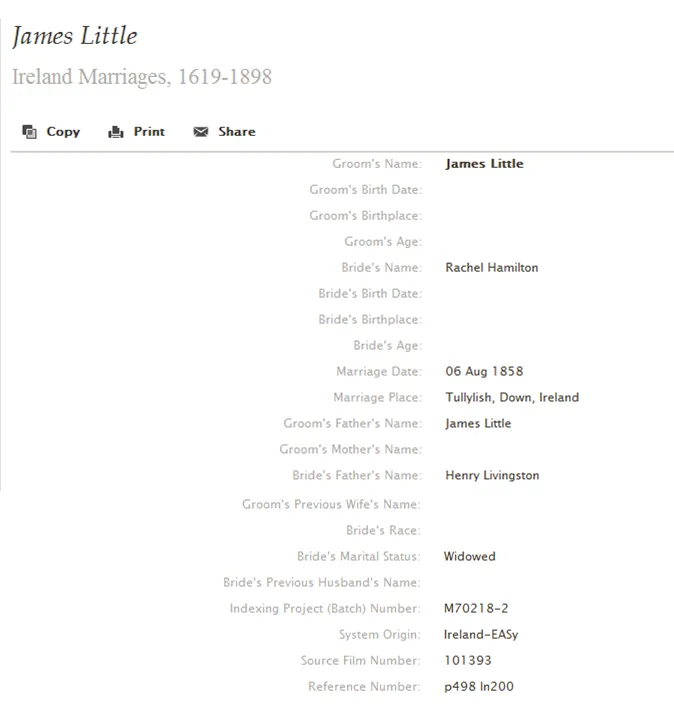
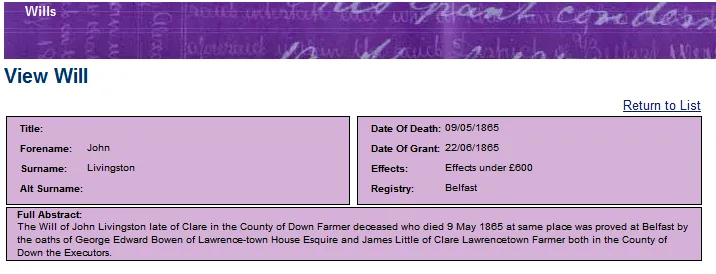
In 1865, James served as an executor of the estate of his brother-in-law, John Levingston.
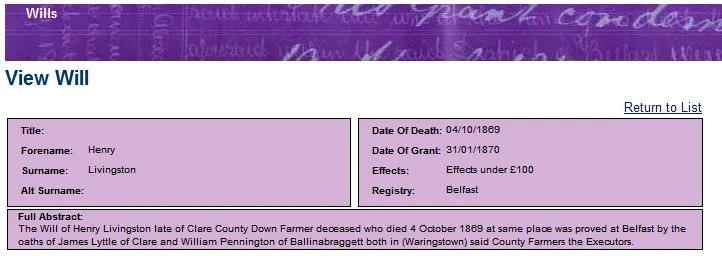
In 1870, he was an executor of the estate of the other brother-in-law, Henry Levingston, Junior.
It turns out that Rachel had a niece named Bessy Levingston, whose granddaughter provided this picture. On the back is written, "Rachel and James Lyttle, 1876." The spelling of the name as Lyttle (versus Little) will be discussed later. It is hard to believe that this is my great-grandfather, since he looks quite unlike any of the offspring. But, taking the handwritten note at face value, here is the document.
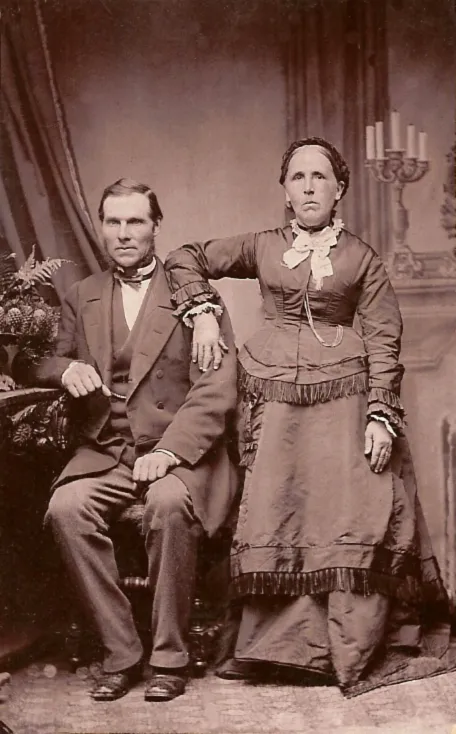
Unfortunately, we know very little about Rachel and their life together. They do not seem to have had any children. She died eight years after that photograph, and was buried in her brother John's family plot.
The Homestead
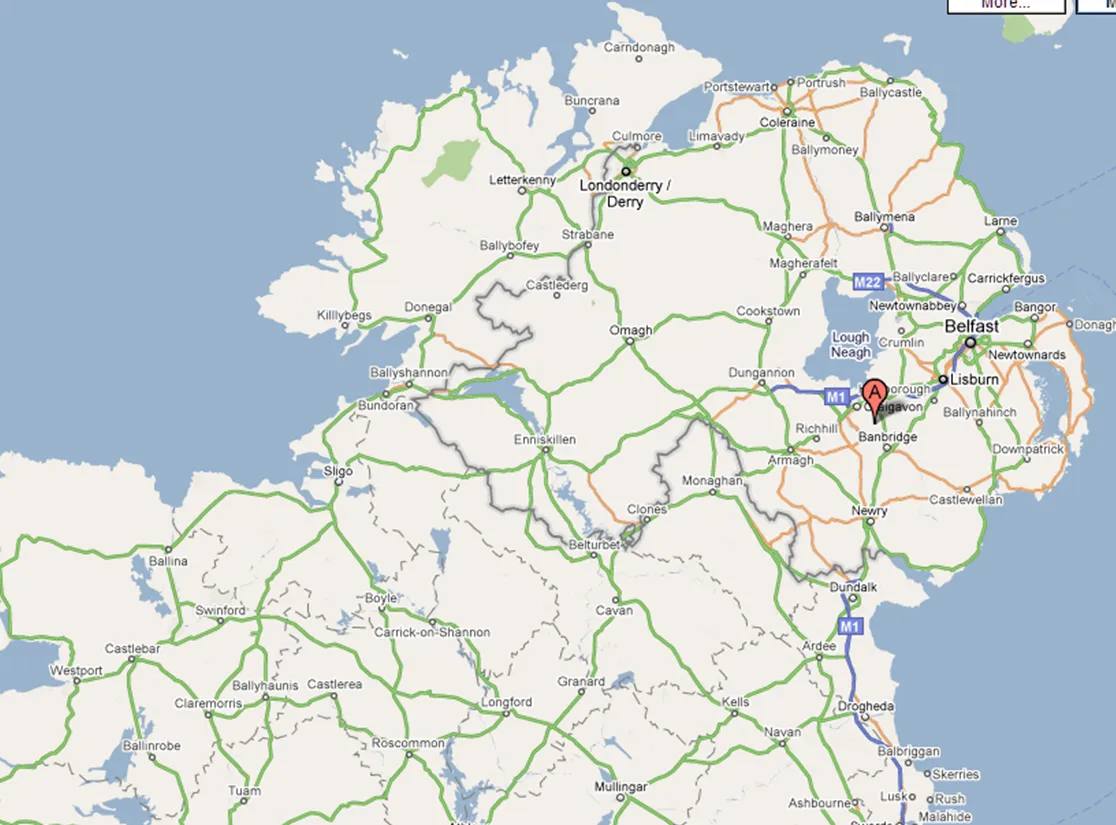
James Little lived all of his adult life (and was probably born) in County Down, Ulster, South East of Lake Neagh. His farm was in the Townland of Clare, about half way along the Clare Road that runs from just South of Waringstown (where his Presbyterian church records were kept) toward Gilford (where his mail was picked up). This is adjacent to land that belonged to the Levingstons, which is no doubt relevant to his first marriage in some way.
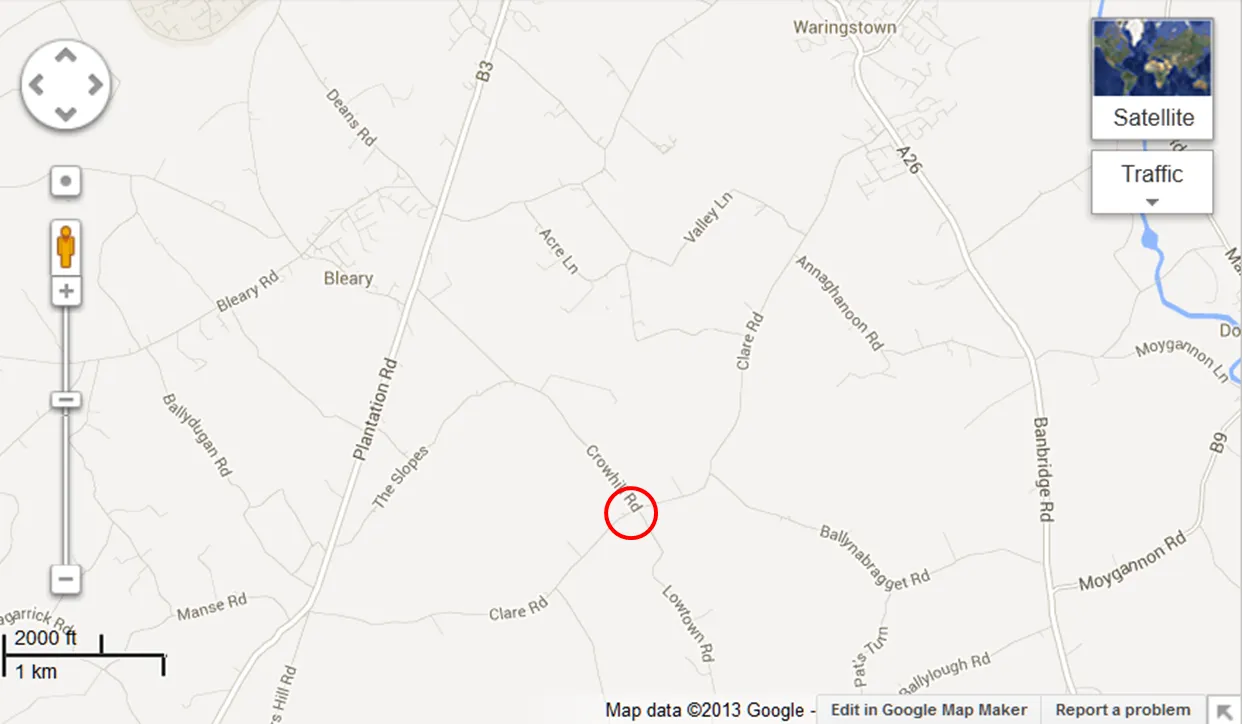
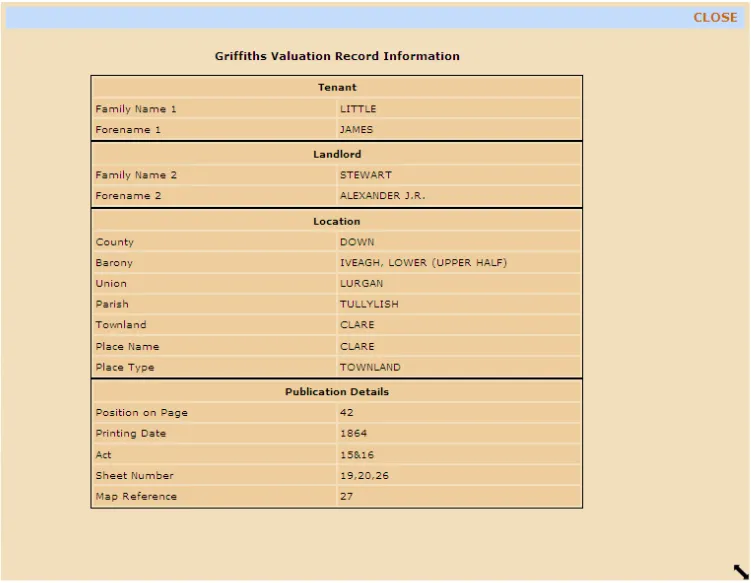
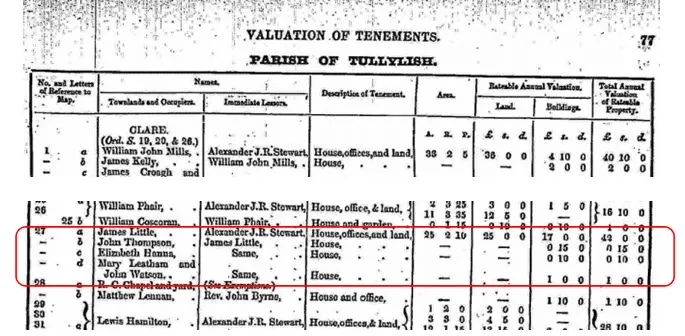
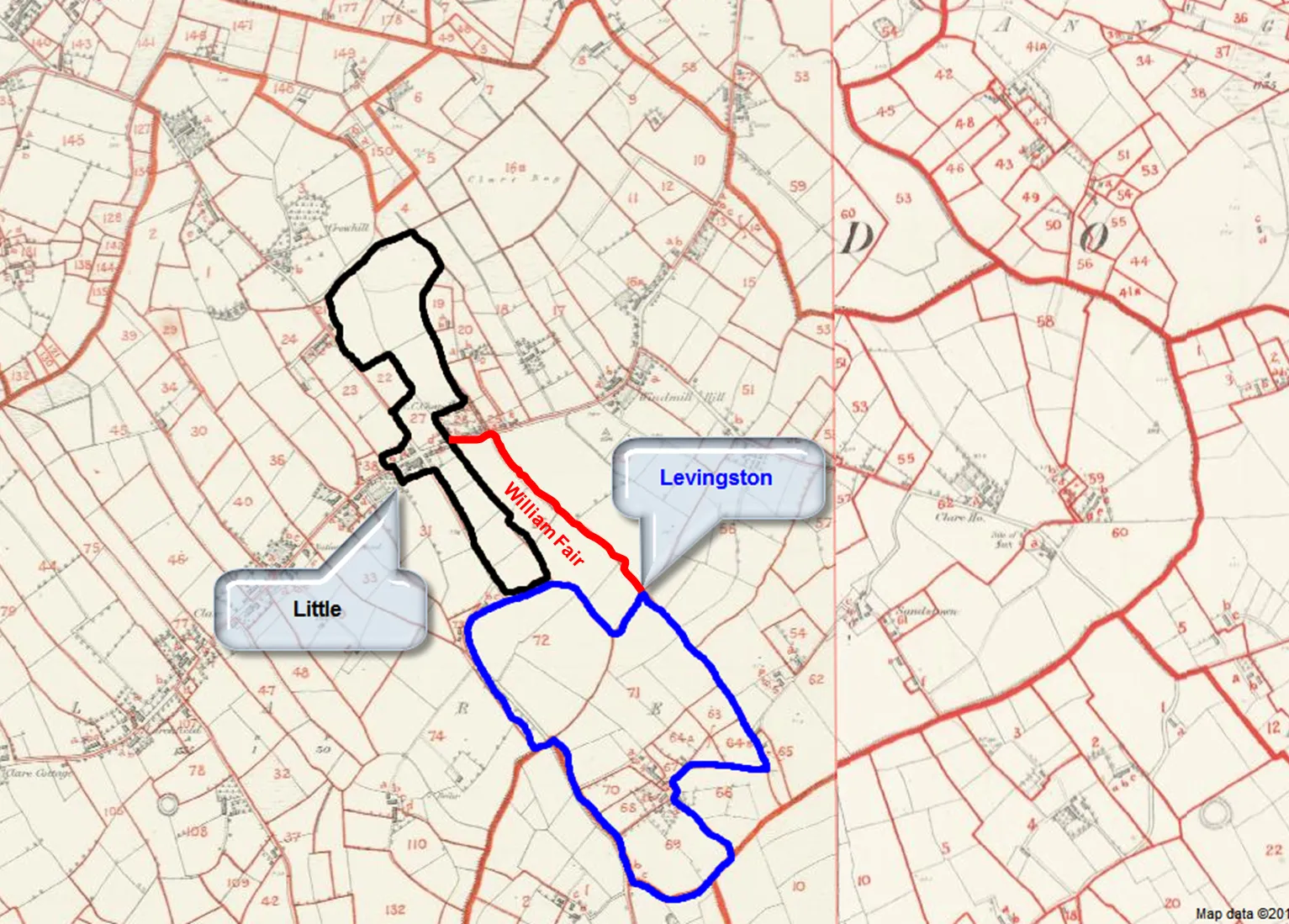
Eight years after James' marriage to Rachel, in the spring of 1864, Griffith's Valuation came to the area. It was a huge government project documenting the location, ownership, and value of all property in Northern Ireland. It identified James' home and outbuildings as Lot #27 at the Southwest corner of Clare Road and a road that is called Crowhill Road to the North, and Low Town Road to the South.
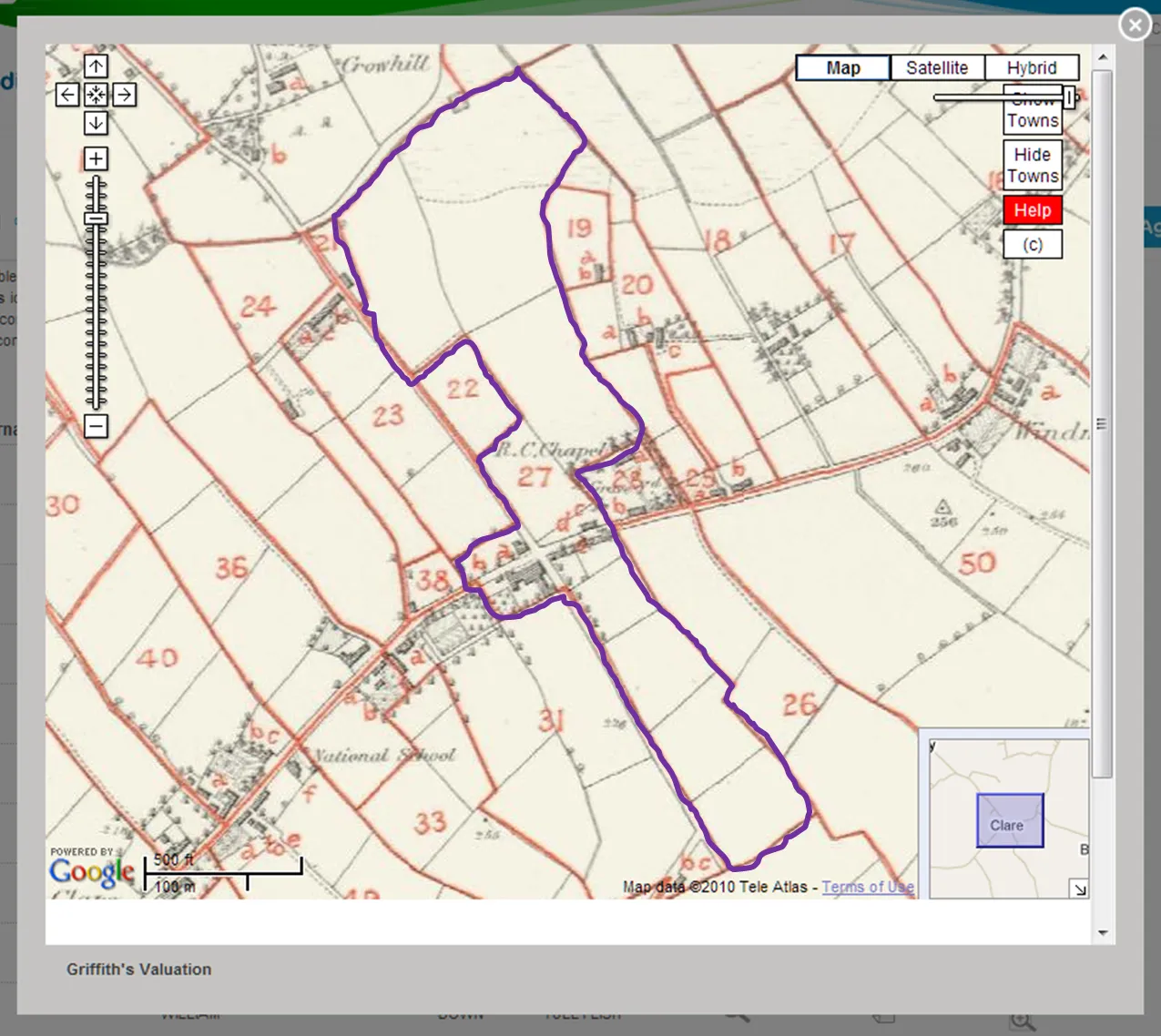
At the time, his property consisted of 25 acres, 2 roods, and 10 perches, using the old measures.
St. Colman's (Lot 28), located kitty-korner from that home, had been used by Catholics for centuries before Hugh Magennis acquired the 1334-acre Townland of Clare in 1583. Many of the surrounding lands remained in the hands of the (Sir Art) Magennis family until that group fell into disfavor in 1641. The Stewarts (of Ards) gained control of the whole area. By the time of the Valuation, that land (along with another 5,000 acres of County Down) was owned by Alexander J.R. Stewart.
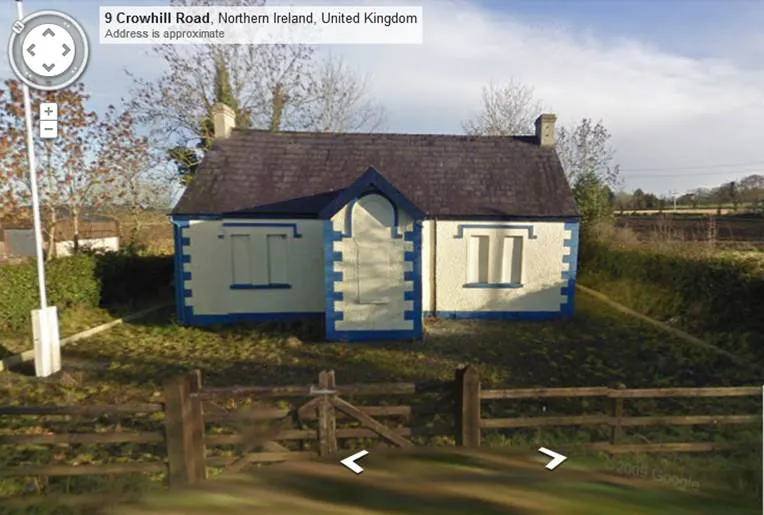
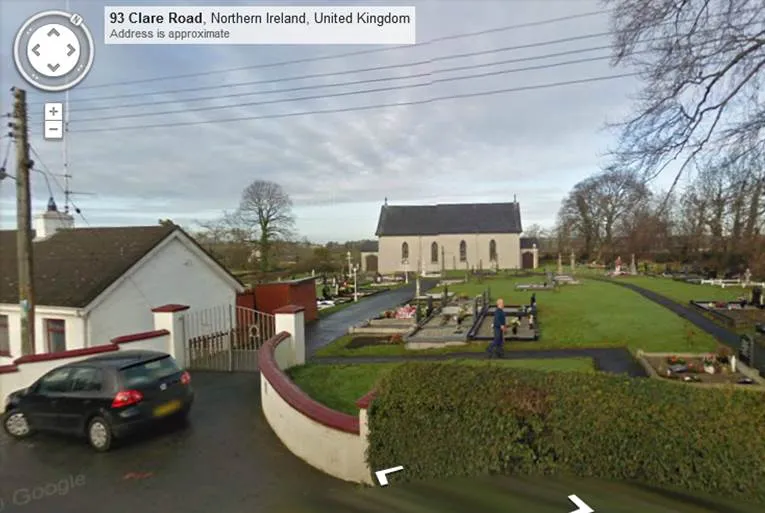
It is interesting to note that two of the patches he did NOT own were the ones marked as Lot 22 (the fiercely Protestant Orange Hall) and Lot 28 (St. Colman's Catholic Church). At some point, they seem to have co-existed peacefully in quite close quarters. As of 2009, when Google took pictures of the area, the Hall (top) looked boarded up, while the Church (bottom) was still going strong.
That whole area was part of Tullylish parish, which was known for fine linen weaving. The weavers who worked at mills in nearby towns stayed in rented cottages called "cotter houses" at Clare and other small towns. James Little, like the other farmers in the ares, leased the farmlands from the Stewarts and in turn rented out cotter's houses on the property to sub-tenants.
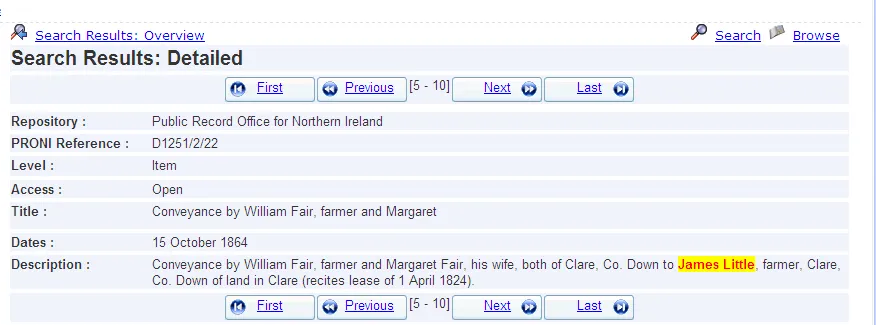
A few months later, the adjacent lot (#26 on the map) was transferred to James by his neighbor William Fair. This document mentions a lease that goes back to 1824, perhaps an agreement made by James' father at this same location. That lease is currently being investigated (as of 2026).
The McCullaghs
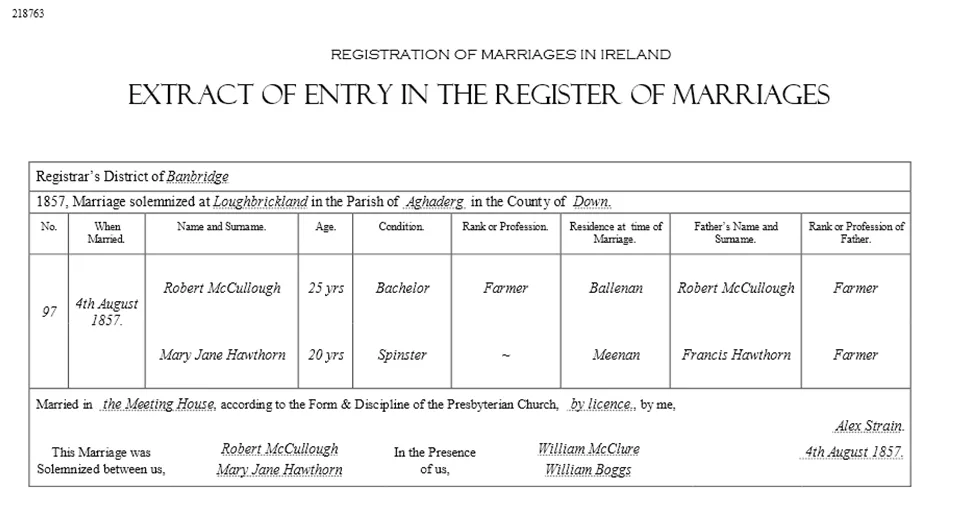
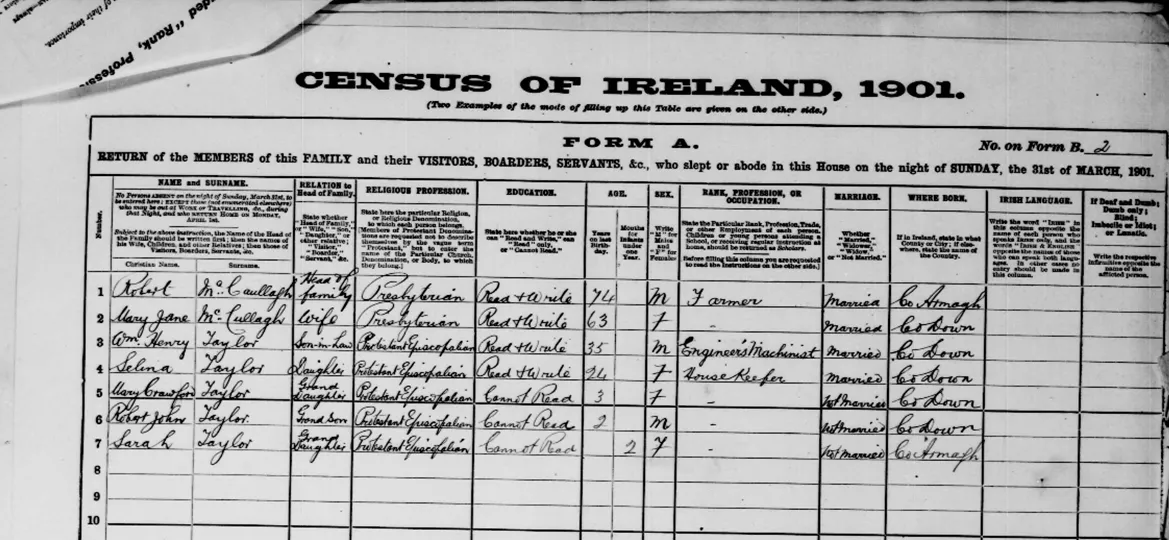
James' friend Robert McClave McCullagh was married to Mary Jane Hawthorn (the daughter of Francis Hawthorn of Meenan, near Poyntz Pass).
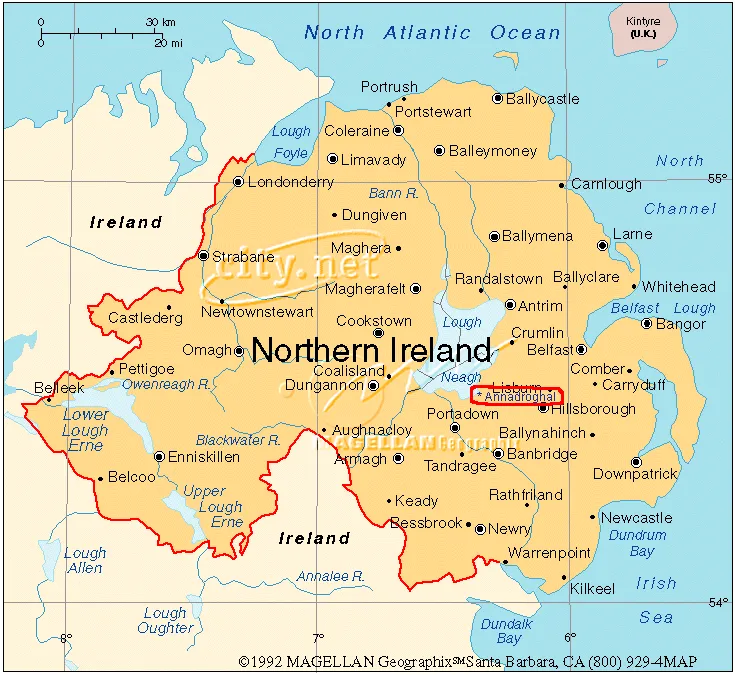
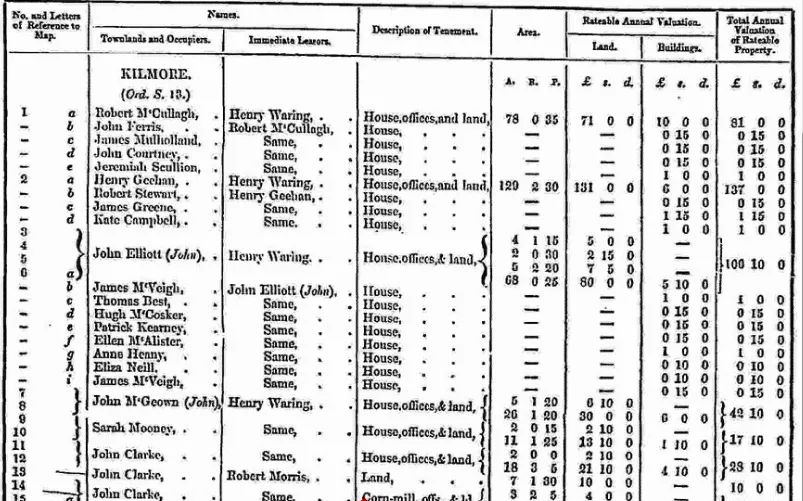
The McCullaghs (sometimes spelled McCullough) lived at Annaghdroghal at the SouthEast corner of Lough Neagh in Kilmore townland, part of Shankill, Down (Grid Reference J0863). Although my family always said that the name meant "hill of bad fortune," it seems to mean simply "big marsh" [Angelique Day & Patrick McWilliams. 1992. Ordinance Survey Memoirs of Ireland: Parishes of County Down III/1833-1838 Mid-Down Vol. 12. Belfast: Queen's University, p. 139].
That farm (Lots 1 and 2) was next door to the home of John Elliott (Lots 3,4,5, and 6) since 1760. That makes sense, since the Elliotts were another of the Border families (a much bigger one) from the Dumfriesshire area of Southern Scotland. They had a home at Arkleton which was (and is) just acoss the river (Ewes Water) from the home of the Little clan at Meikledale (about 7 miles NorthEast of Langholm on the A7 road). Today, that McCullagh farm is the site of the bridge over the Lagan Navigation Canal [Thrift, Gertrude, Ed. 1918. Index of Irish Wills: Dromore, Newry, and Mourne Vol. 4. London: Phillmore & Co., p. 39].
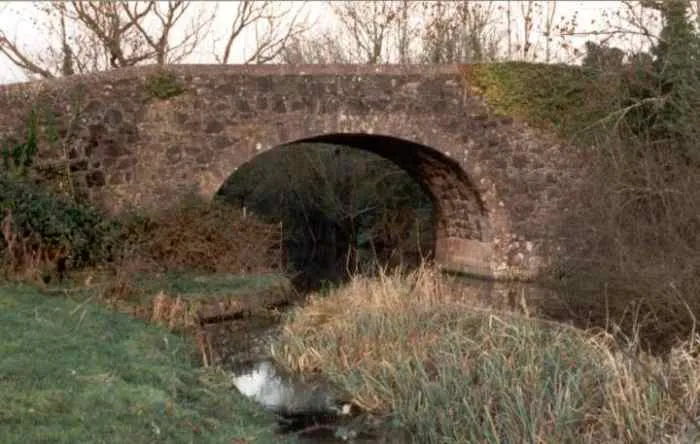
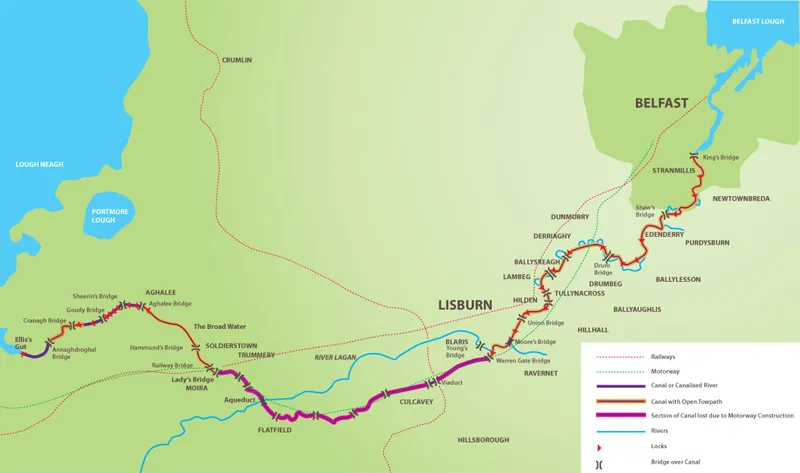
From 1794 until the 1930s, there were tow paths along the canal from which horses pulled barges all the way to Lisburn to enter the larger canal and head to the port city of Belfast. Today, that bridge is the starting place of a walking tour and/or bicycle route along the path of the old canal.
The 78-acre McCullagh farm there was owned by Henry Waring, descendant of Colonel William Waring, after whom nearby Waringstown is named. The McCullaghs, like the other farmers in the area, rented out cotter houses to sub-tenants.
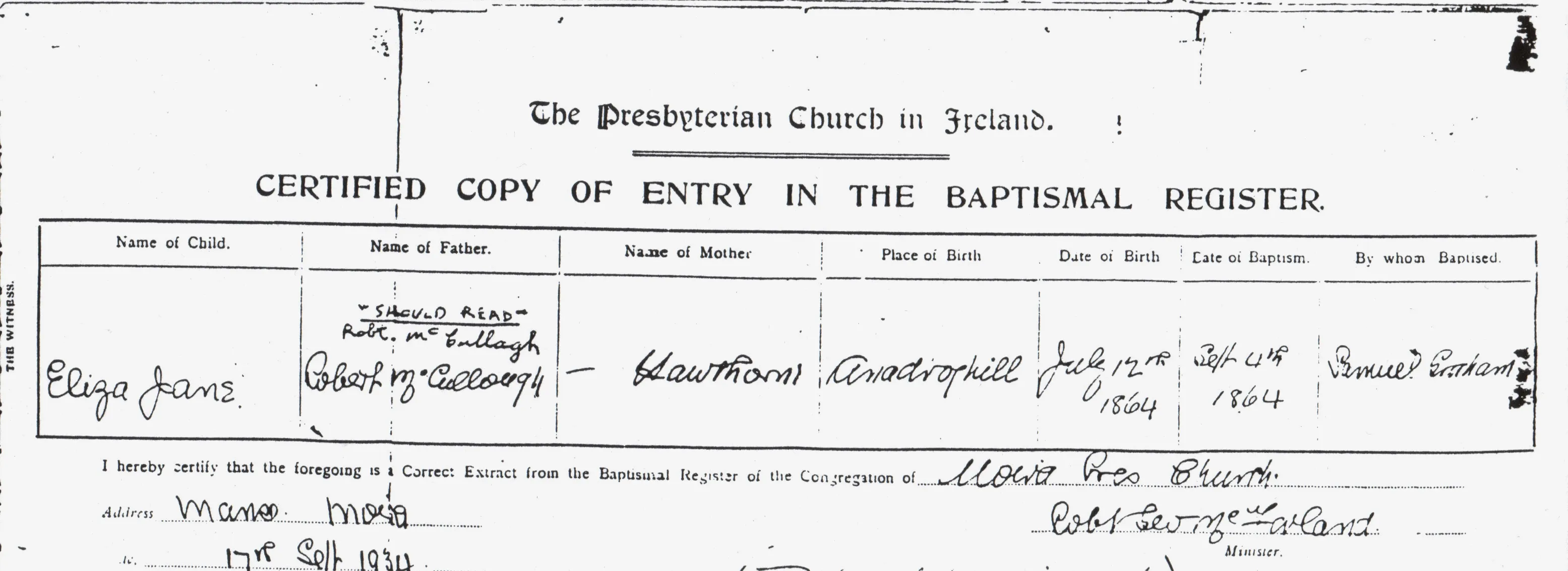
On July 12, 1864, the McCullaghs gave birth to Eliza Jane "Jennie" McCullagh.
Then, in 1871, Robert and Mary Jane moved to the 18th Century stone "Fortland House" with 90 acres of land, about four miles North of Moira and a mile and a half East of Aghalee. This is where Jennie grew up with her famous brother Sir Crawford McCullagh, (thrice Lord Mayor of Belfast, et cetera).
BACKGROUND: Sir CrawfordBy the time of the 1901 census, Robert and Mary Jane could be found living with another daughter's family at Cornakinnegar, Armagh ... very near their original farm at Annodroghal.
"Jennie"
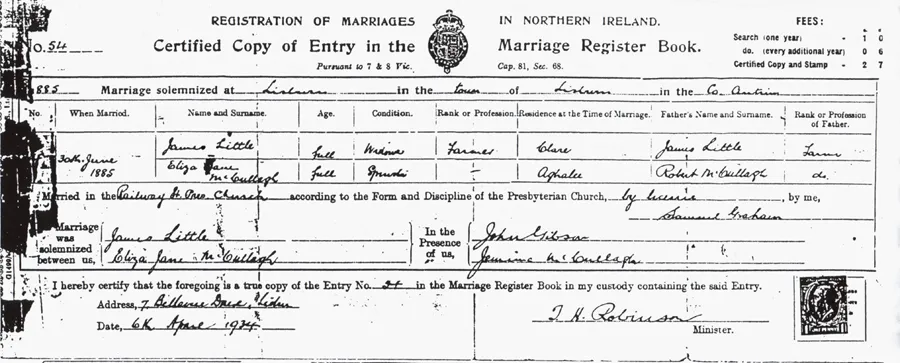
On June 30, 1885, about 10 months after his wife Rachel died, and at the age of about 58, James married Jennnie who was (almost) 21 years of age.
The first child born to James and Jennie was a son named James Andrew on August 31, 1887 but that child did not survive. When a second son (my grandfather) came along on July 31, 1889, the family seems to have just kept and used that original birth certificate for official purposes. This did not present any problems for him until he was asked to retire when he was only 63. It took some time and bureaucratic headaches for him to be allowed to keep working for the next two years.
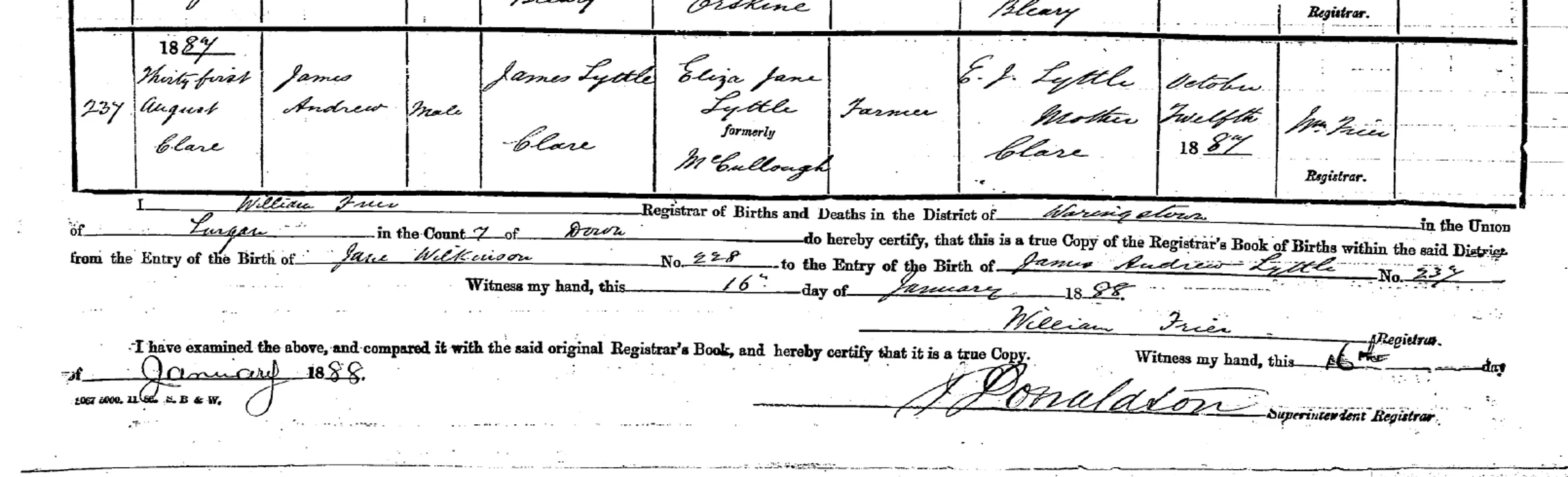
This document spells the name Lyttle instead of Little. Until that time, the spelling seems to have been unimportant so long as it was phonetically sound. We asked my grandfather why the spelling had finally settled this way and he would only quip, with a twinkle in his eye, "I believe it had something to do with a horse." In fact, spellings had to be settled as part of the 1897 Diamond Jubilee "Rural Free Delivery" mandate all across the United Kingdom and Ireland. There was another James Little at nearby Bleary (four miles North, yet in the same parish of Tullylish). Whether it was to clear up who owned a certain horse, or to confirm which James was the recipient of mail, the change was made and remains in place today.
The next child was Florence Jemima (known as Florrie Pat), born November 22, 1890. She went on to work her way up in the Buying department at Eaton's retail store and travelled extensively in Britain and Europe seeking women's fashions. At the time of my grandfather's death in 1964 (when she would be about 74) she was still listed as Florence Lyttle from Toronto, so presumably she was unmarried. The third child was a son, Johnny, who would live only four years from 1892-1896.
Howard Francis was born in 1894. He went on to father Crawford Lyttle who produced, among other children, Yale Lyttle (in the white "Canadian" T-shirt and cap). Yale lives near where my dad retired at Owen Sound in Canada today, has contributed insights to this report, and has recently completed a trek through the family's former territories. He even stayed at Abbeydene (the new name for Lismara, Sir Crawford's old home) while in Belfast, and reports being treated like royalty because of his relationship to them. His brother, Ron Lyttle, has also contributed material to this report.
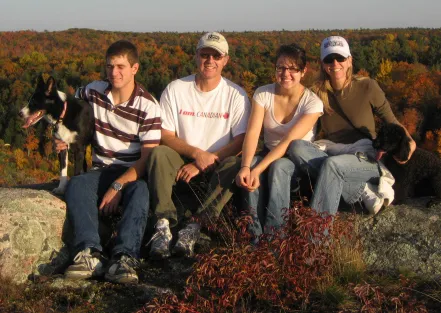
On April 23, 1896, Albert Samuel was the fourth surviving child. He was described (euphemistically?) as a talented pianist with a nervous disposition who never married. The fifth and last child of this marriage was Rachel Violet ("Auntie Vi"), born April 11, 1898 when James Little would have been about 68. Vi went on to marry Robert Brown Donald and they both lived happily and fruitfully into their nineties, producing three children and eight grandchildren.
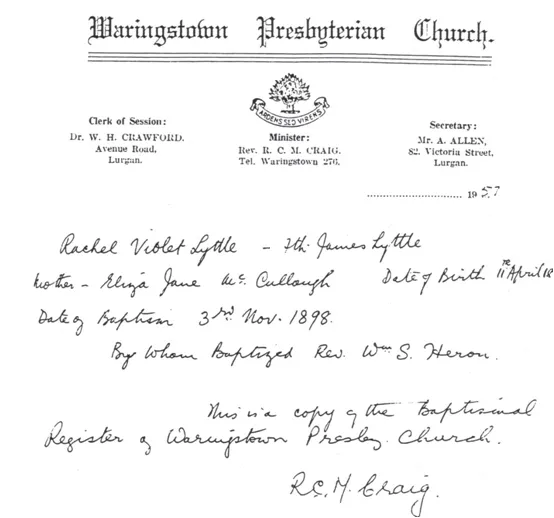
For decades, our family thought of my great-grandfather as "James Lyttle the 7th," misreading the notation for father (Fth) above.
By the time of the 1901 census on April 18th, The Lyttles had more houses rented out.
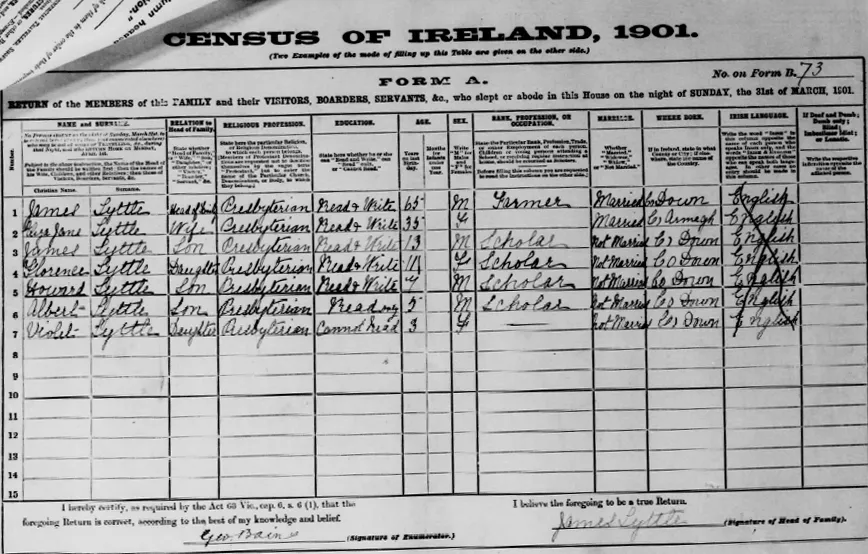
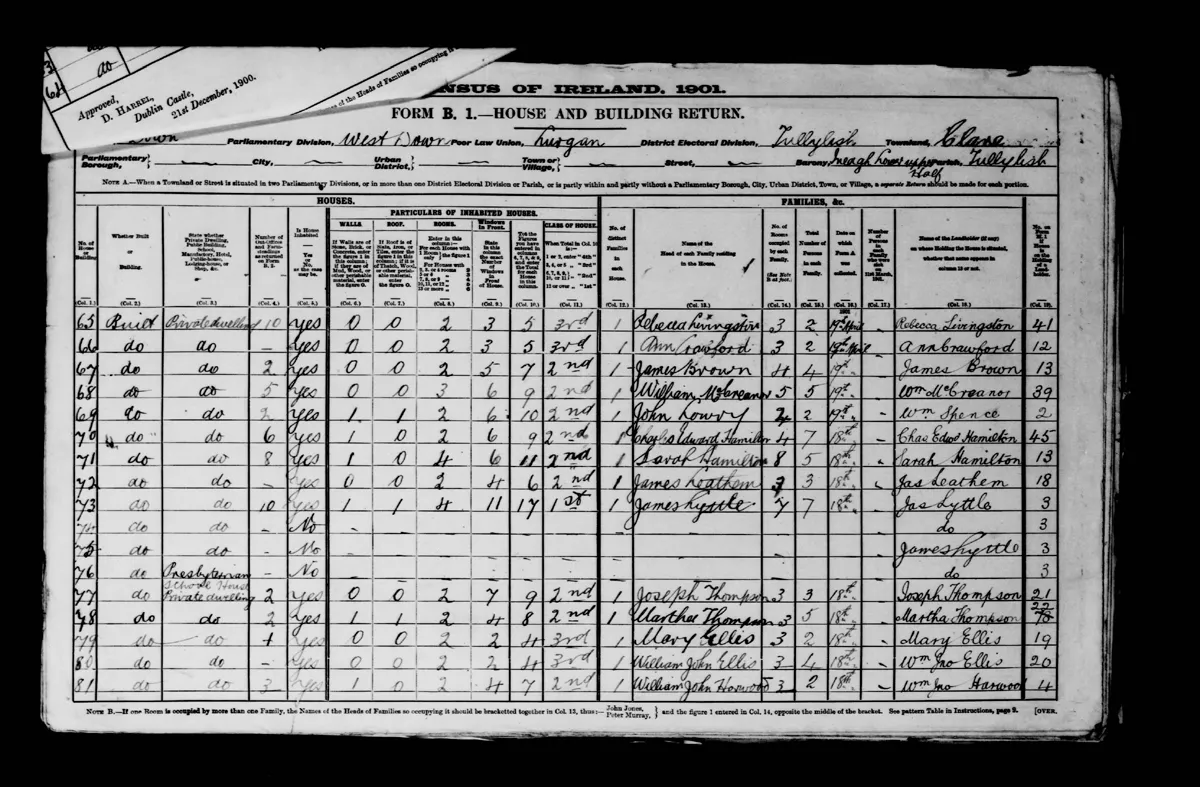
My uncle, Ross Orville Lyttle, reports that they had 72 acres at this time - considerably more than the 25 or so at the time of the Griffith's Valuation 37 years earlier. This is easy to understand, if his empire now consisted of the original lands (Lot 27), plus the adjacent property of William Fair (Lot 26), and the nearby Levingston lands (Lots 63, 64, and 67-72).
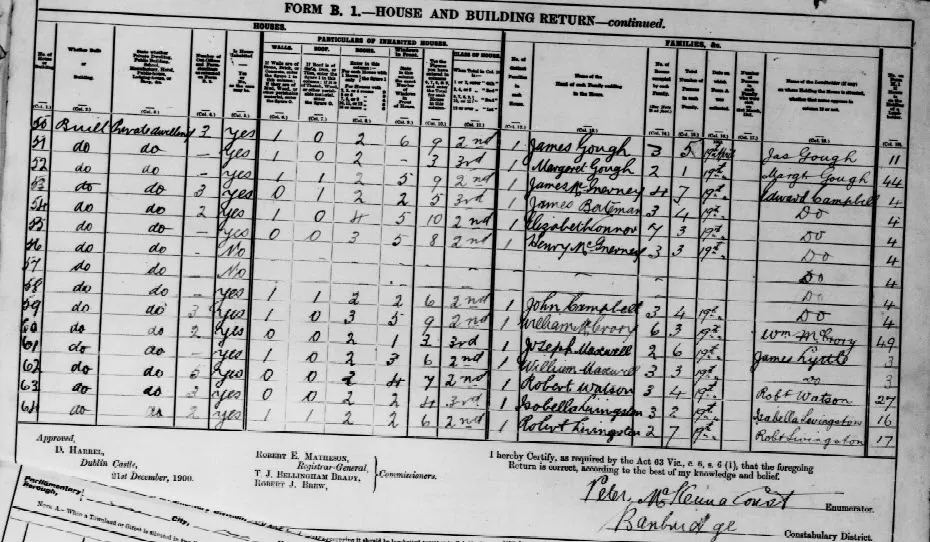
Two homes were rented out to the Joseph Maxwell and William Maxwell families.
Across Clare Road, there were three homes, two of which were occupied by the families of Elizabeth Thomas and Ann Lennon with the third one vacant. The next building (105) was the Roman Catholic Chapel, which is of course today's St. Colman's Church.
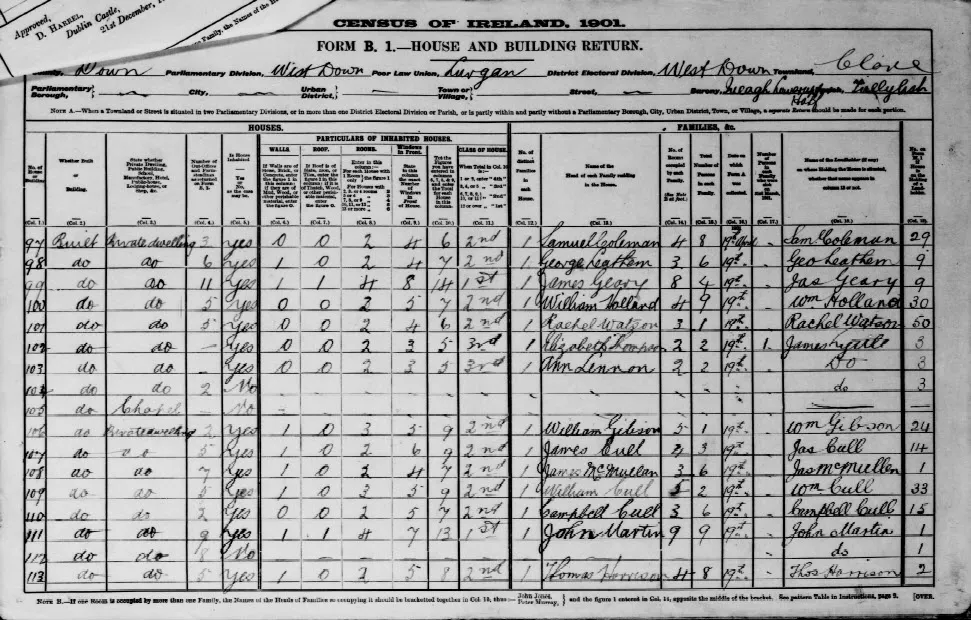
Two of the other houses on the main property were unoccupied, as was the schoolhouse to the west of his farmhouse. In this listing, it seems as if the school belonged to the Lyttle family, but that is unlikely. That school was a small one, supported by its students in 1836 as part of the National (secular) system and, by 1901, identified as a Presbyterian school.
Widowed
About six months after that census, on October 2, 1901, James died of a heart attack and was buried at the old Tullylish graveyard, two miles South of Clare at Laurencetown.
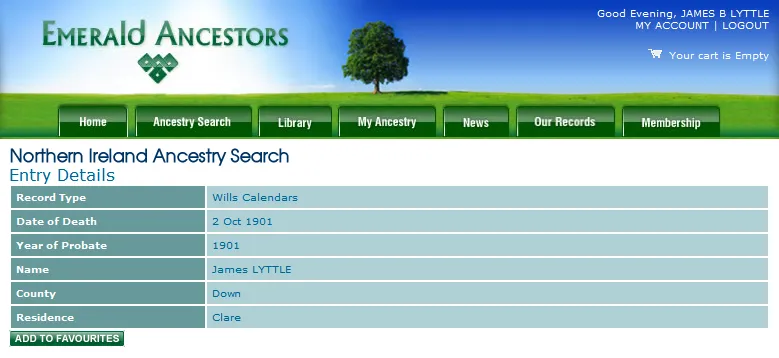
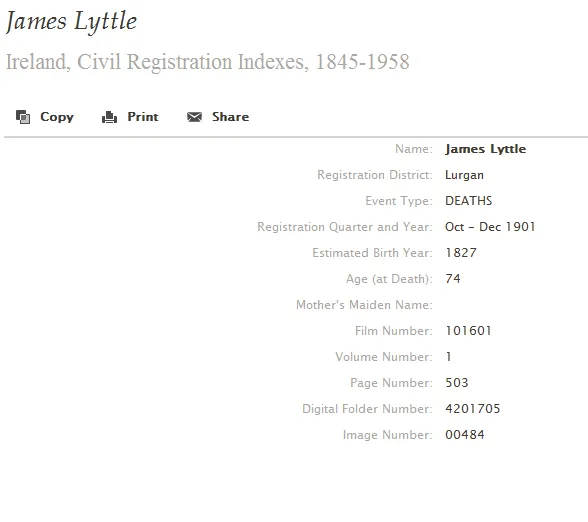
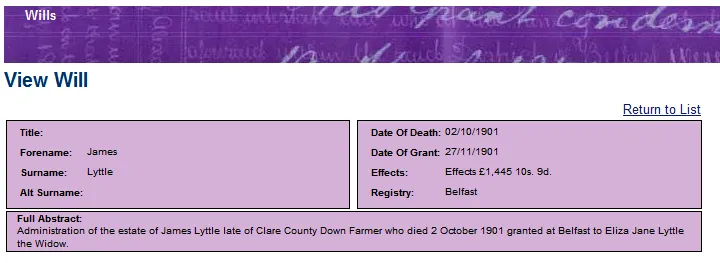
The grant, awarded on November 27, left Jennie 1,445 pounds, 10 shillings, and 9 pence, which her brother (Sir Crawford) helped her invest.
Before long, the farm was sold to the (John Lewis) Gilpin family: Methodists from County Armagh. They held the homes on both sides of Clare Road, between the Presbyterian Meeting House that used to be the National School (#67) and the R. C. Chapel that would become St. Colman's Church (#74).
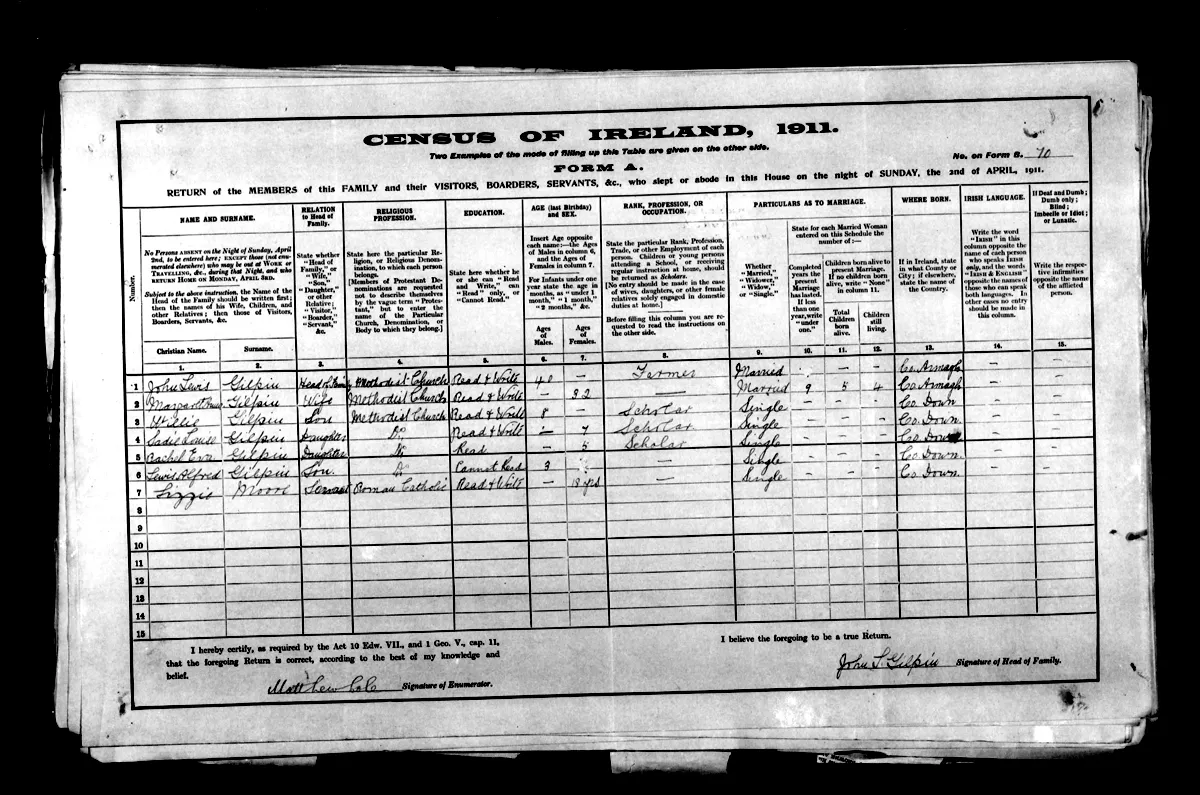
The family of their son, Lewis Alfred Gilpin, was still living in the house when my grandfather visited in 1957. They had tea and visited together at that time, and my grandfather was able to find the 30 granite markers he had helped his dad install at the entrances to their various fields.
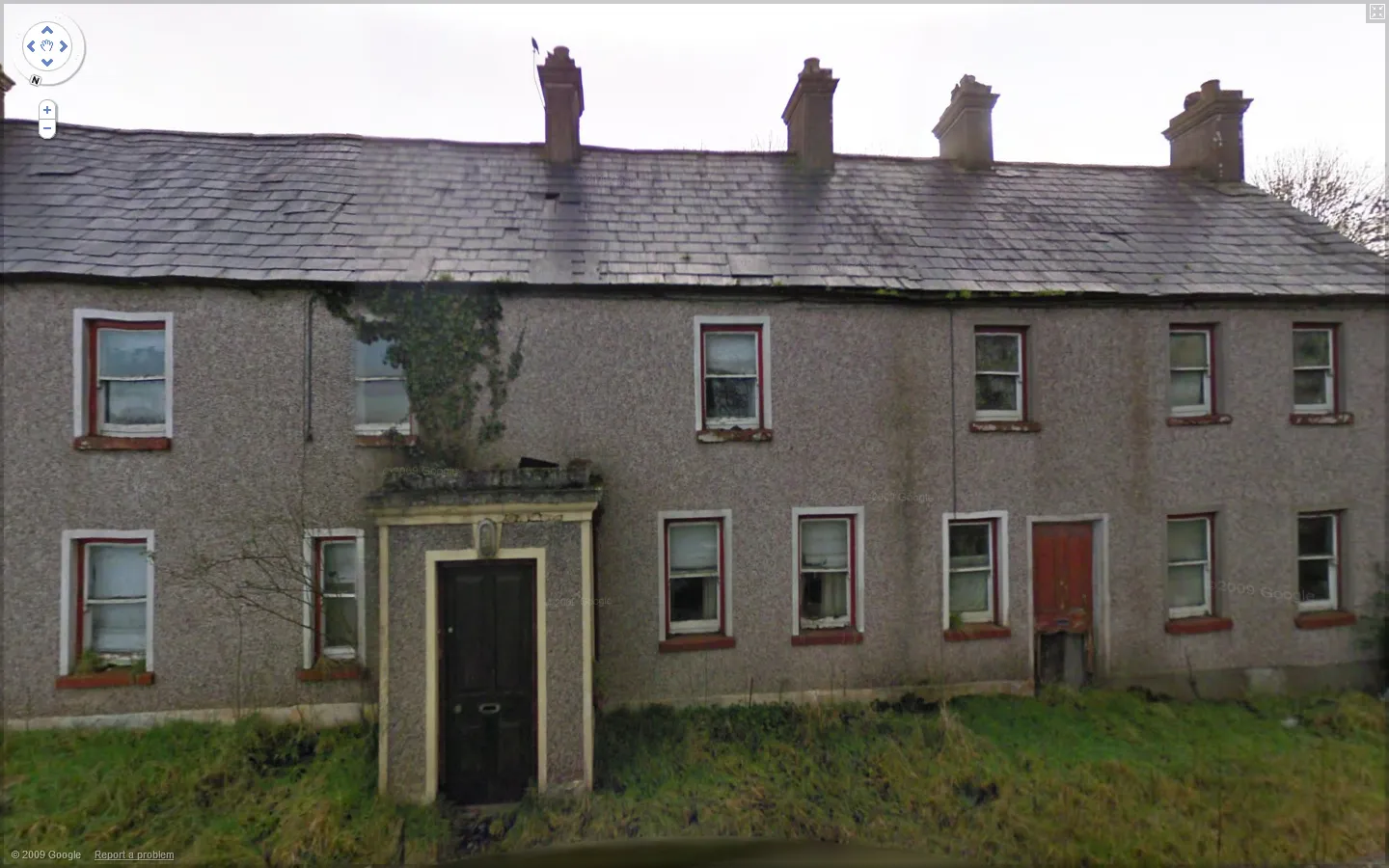
My grandfather took some pictures during that visit, which can be compared with current Google Maps images, about fifty years later. His are on top
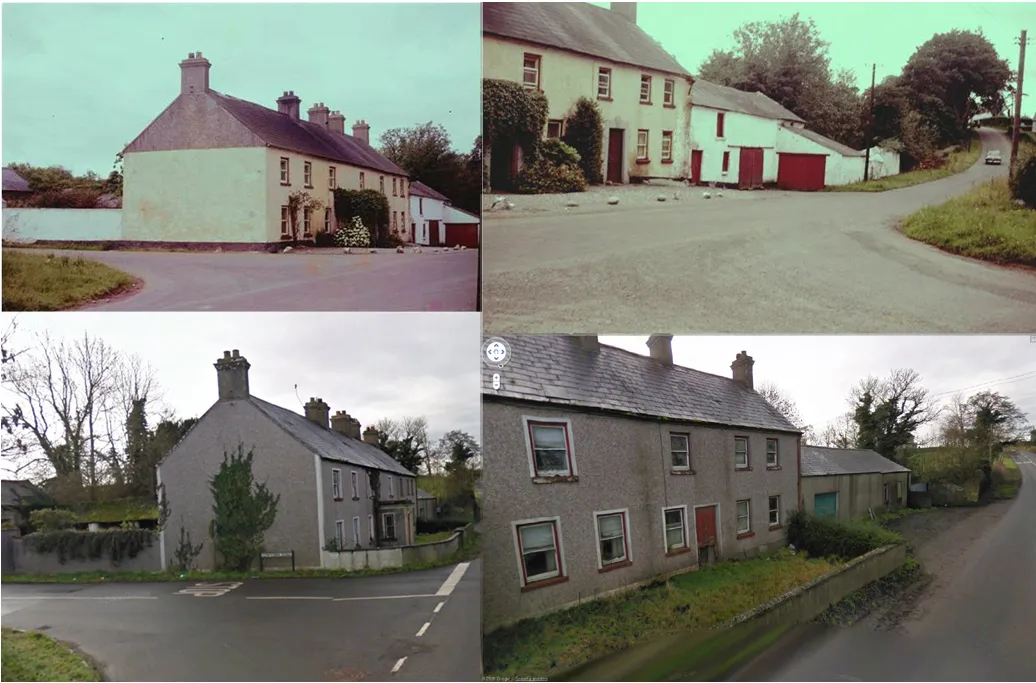
It looks like the farmlands have been sold off; and the house seems to be in disrepair. In fact, all the windows on the ground floor have since been closed off with cinder block.
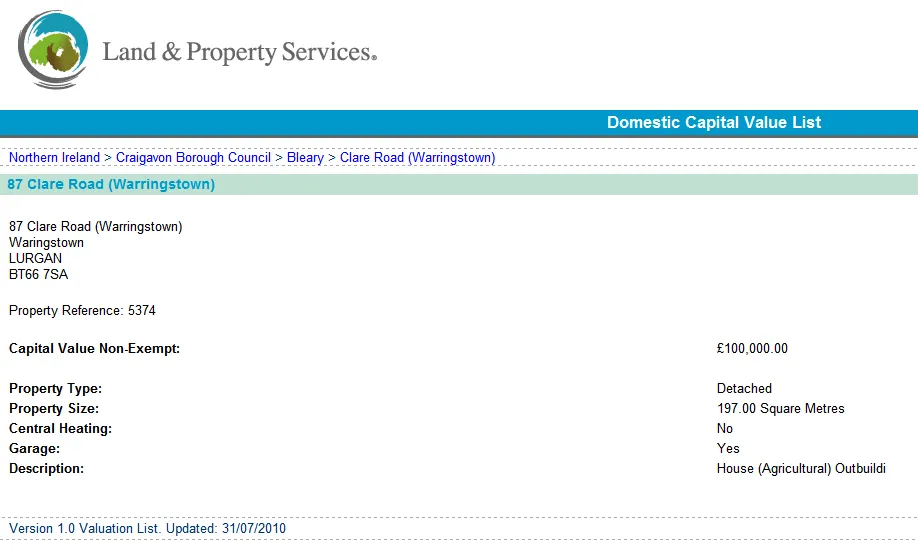
The address is now 87 Clare Road, Waringstown, LURGAN BT66 7SA (Property Reference: 5374) and consists of only 197 square meters valued, for assessment purposes, at 100,000 pounds.
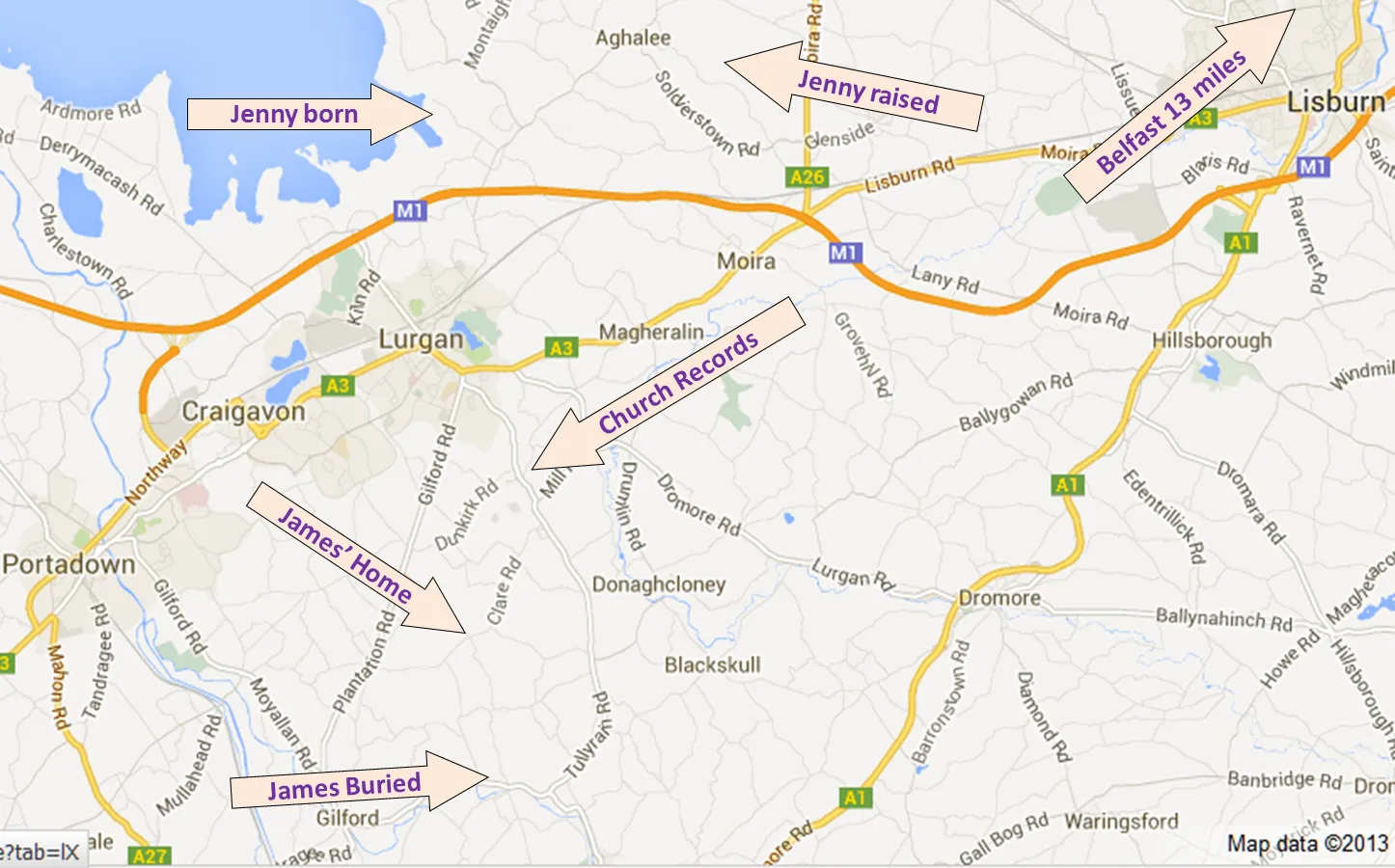
Here is a map of part of Ulster (Northern Ireland), with some highlights noted.
Belfast
After James' death, Jennie and the children lived on the return from her investments for a while. My grandfather apprenticed to Lisburn grocer John Gibson (who had been a witness at James' and Jennie's wedding). My grandfather often spoke of making home deliveries on a bicycle, mixing each customer's favorite blend from a recipe list, using the assortment of teas spread out in his bicycle carrier. Later, Jennie would marry Thomas Brown, a 36-year-old grocery importer.
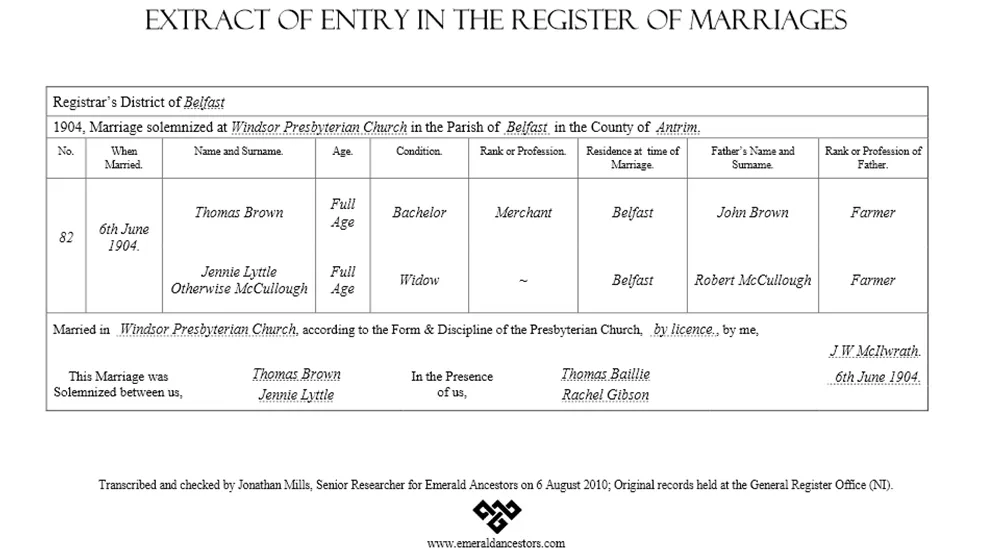
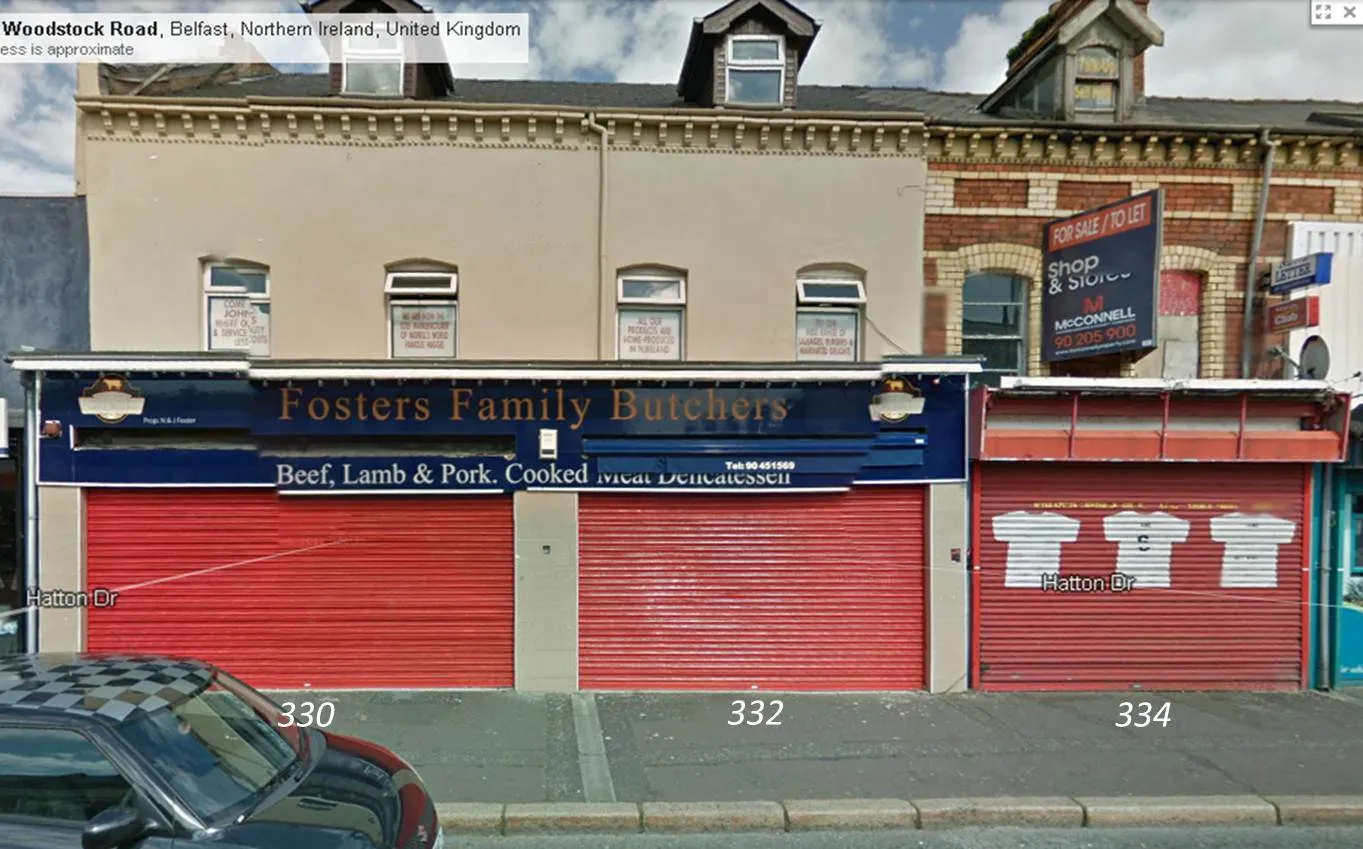
She moved the whole family to his store at 334 Woodstock Road in Belfast, BT6 9DP.
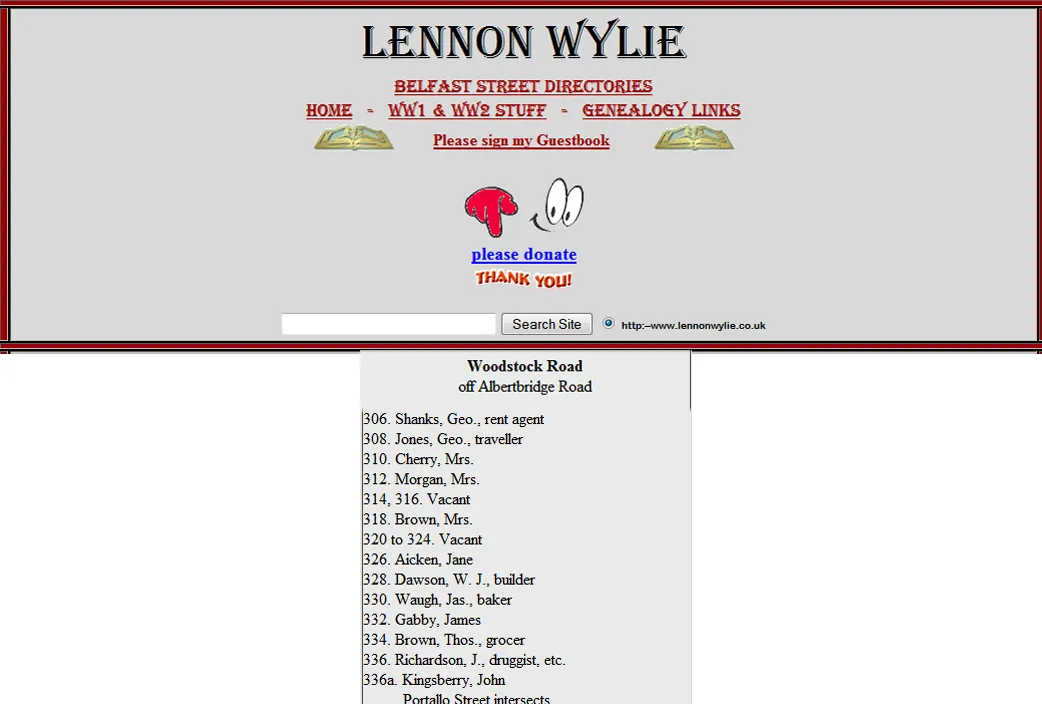
Later, that store would be combined with neighboring buildings to become R. Fleeton & Co., family grocers. Today, that block is the home of Fosters Family Butchers.
Jennie's second marriage did not last long, however, as Thomas died of bronchitis a few months later -- more than two months before his son Tommy was born.
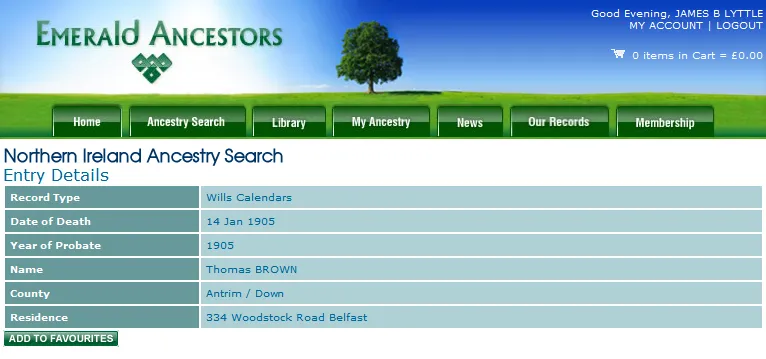
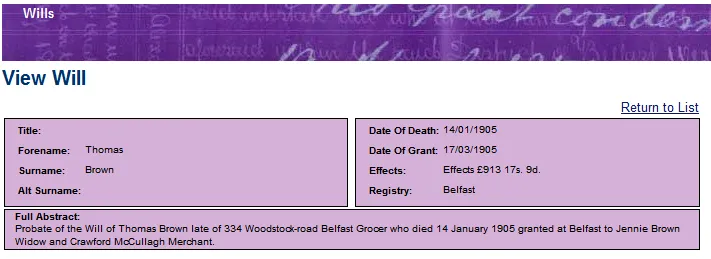
Mr. Brown was buried in Section P, Class 3, Number P40 of the Belfast cemetery, leaving Jennie another estate of just over 913 pounds.
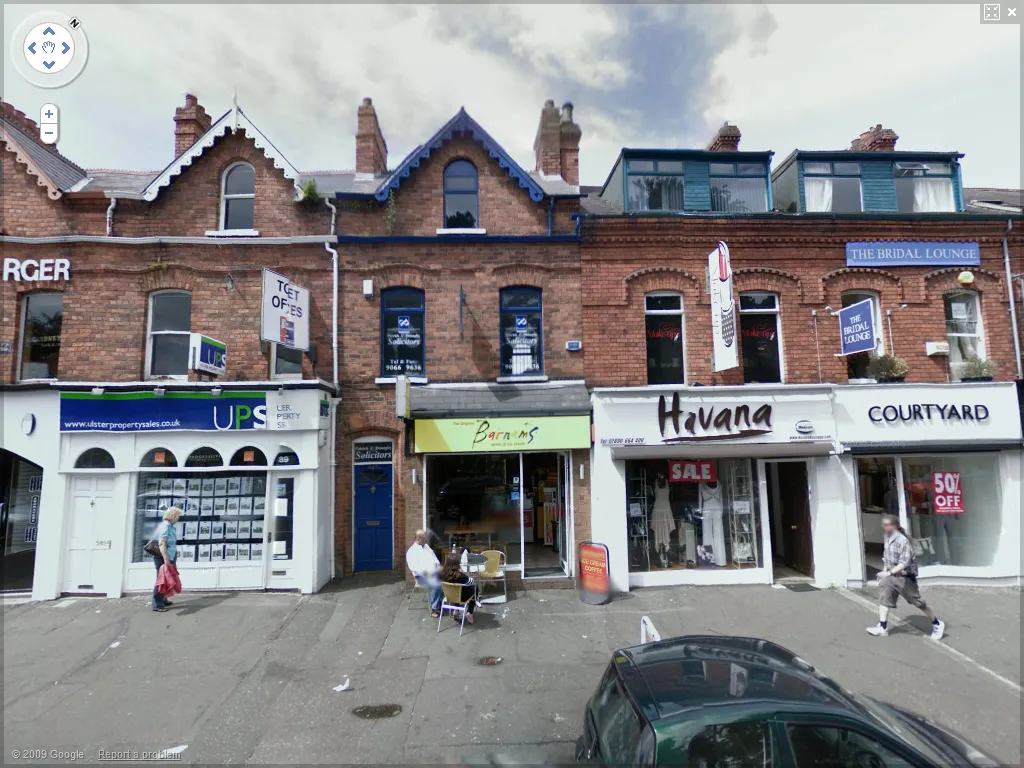
The widow and her family then moved into 587 Lisburn Road in Belfast, BT9 7GS by the time of the 1911 census that was conducted at the beginning of April. That home was less than half a mile down the road from the Windsor Presbyterian Church at Derryvolgie Avenue, where Jennie and Thomas Brown had been married, and the rowhouse now hosts a Barnam's ice cream shop with solicitors' offices above.
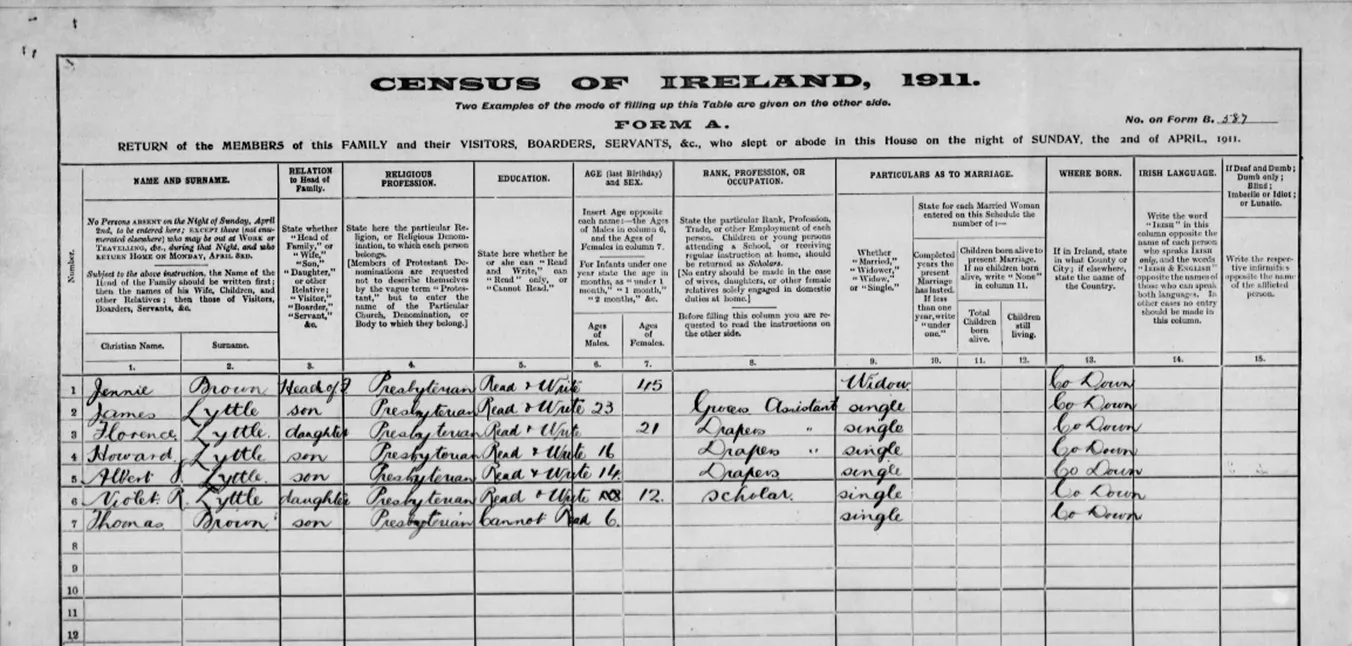
Jennie and her young son Tommy were being called Brown at the time, and Jennie was listed as being 45 year old, although she would in fact be turning 47 in three months. My grandfather was listed as 23 (because of the birth certificate situation) and described as a grocer's assistant. The other children had been employed by Sir Crawford and were thus listed as draper's assistants, except for Vi and Tommy who were still in school at that time.
Canada
On Friday, May 12, 1911, Sir Crawford paid 50 (pounds Sterling, presumably) to send my grandfather and his eldest sister "Florrie Pat" (Florence) to Canada via Liverpool, second class.
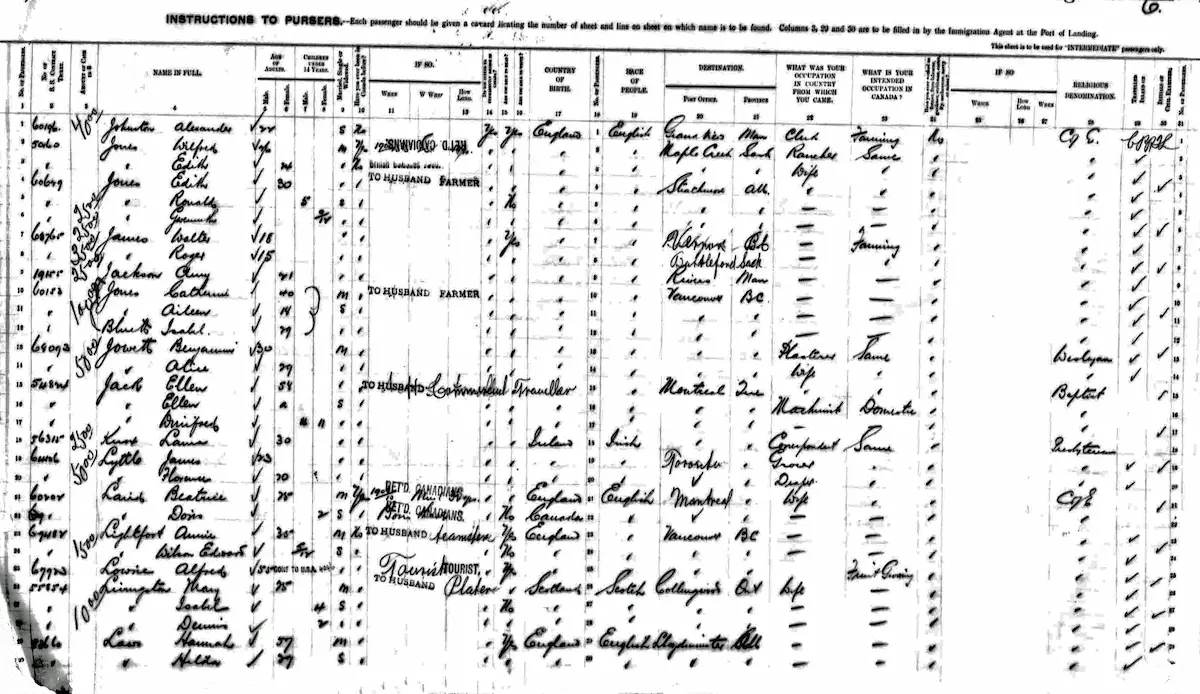

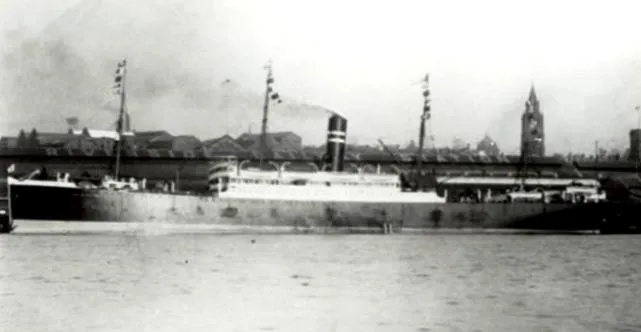
They traveled on the Lake Manitoba (Canadian Pacific) to Montreal.
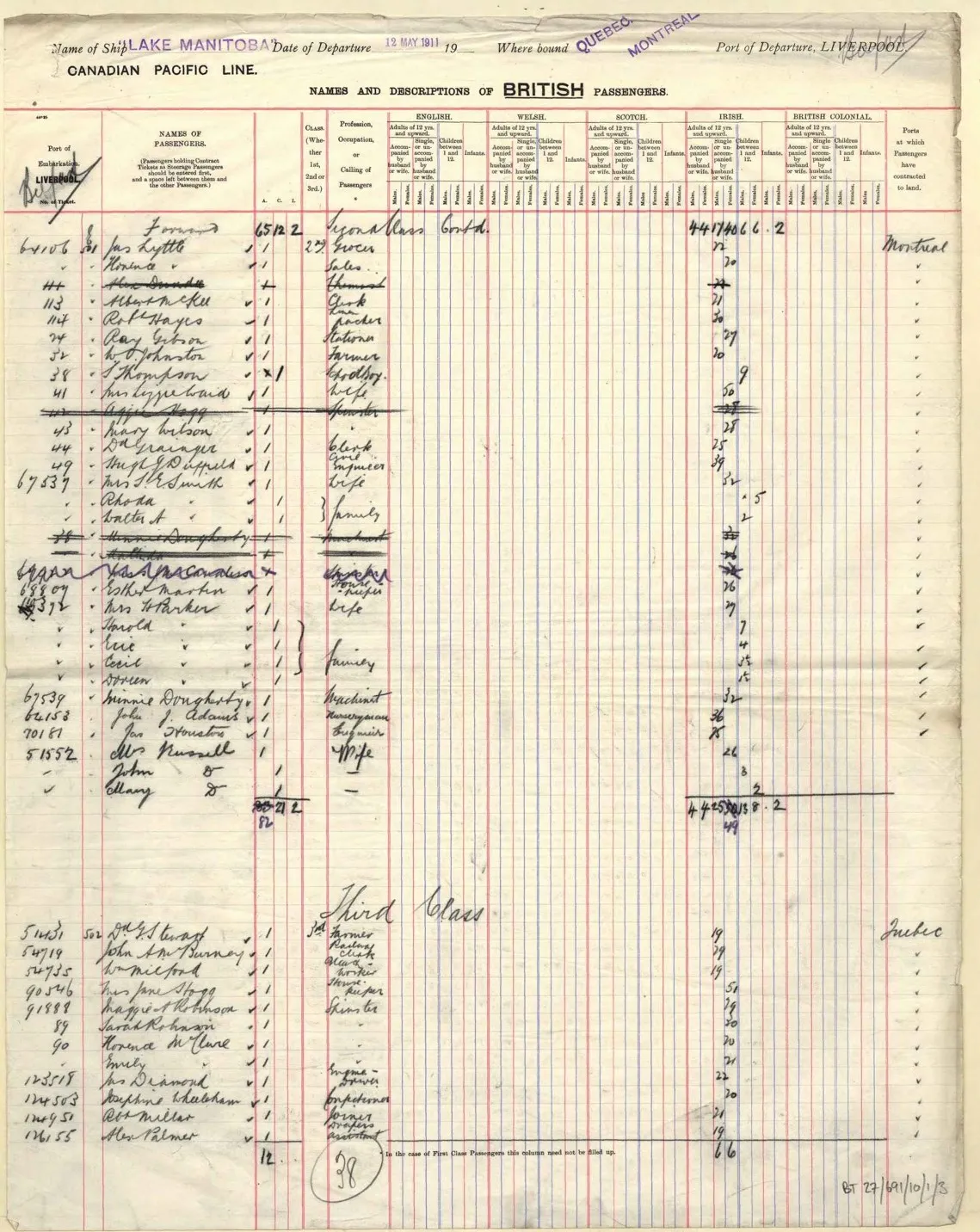
Then they made their way to Toronto, where they were able to locate "the milkman's brother" on Wellesley Street. They spent Sunday night there and, the next day, were given jobs by Mr. Allen: a friend of Sir Crawford and Director of the Timothy Eaton store.
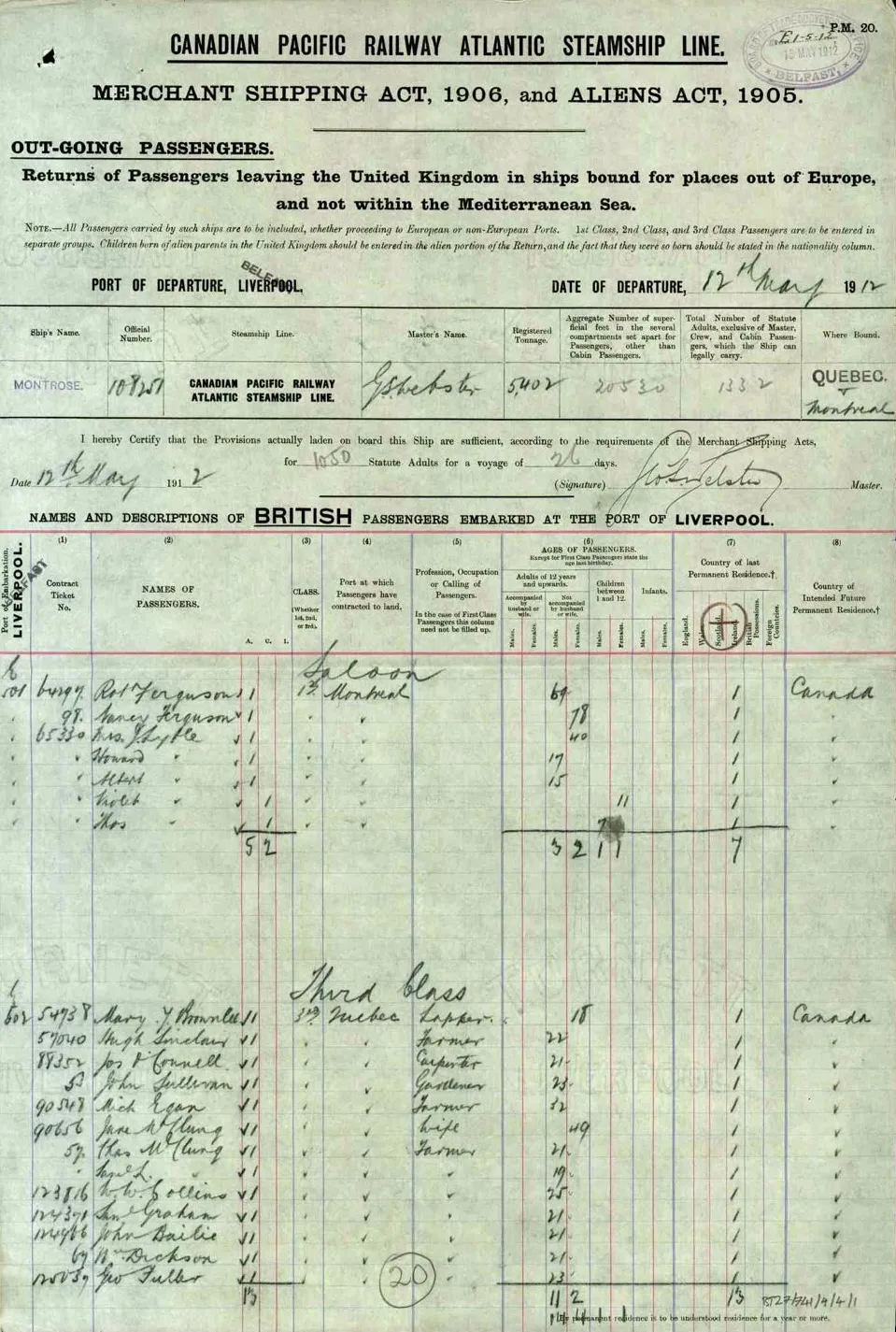
The next Year on Sunday, May 12, 1912 (about 40 days after the departure of the Titanic from the same port, and about three weeks after its sinking), Sir Crawford sent the rest of the familyt to Canada: his sister Jennie and her children Howard (17), Albert (15), Violet (11), and young Thomas (7). They travelled on the Montrose (also Canadian Pacific), "saloon."
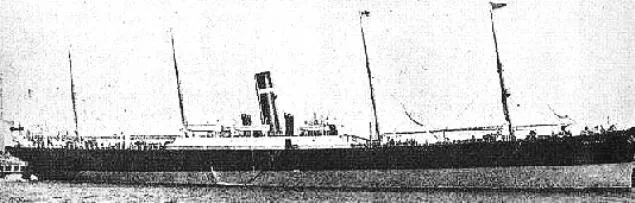
I do not know what it means to travel saloon class. Maybe they slept in the bar, or at least on that level of the ship. It seems that all of the fees had been marked down, in our case from 100 to 70 (pounds?), perhaps in response to the news about the fate of the Titanic ... although that's pure conjecture on my part.
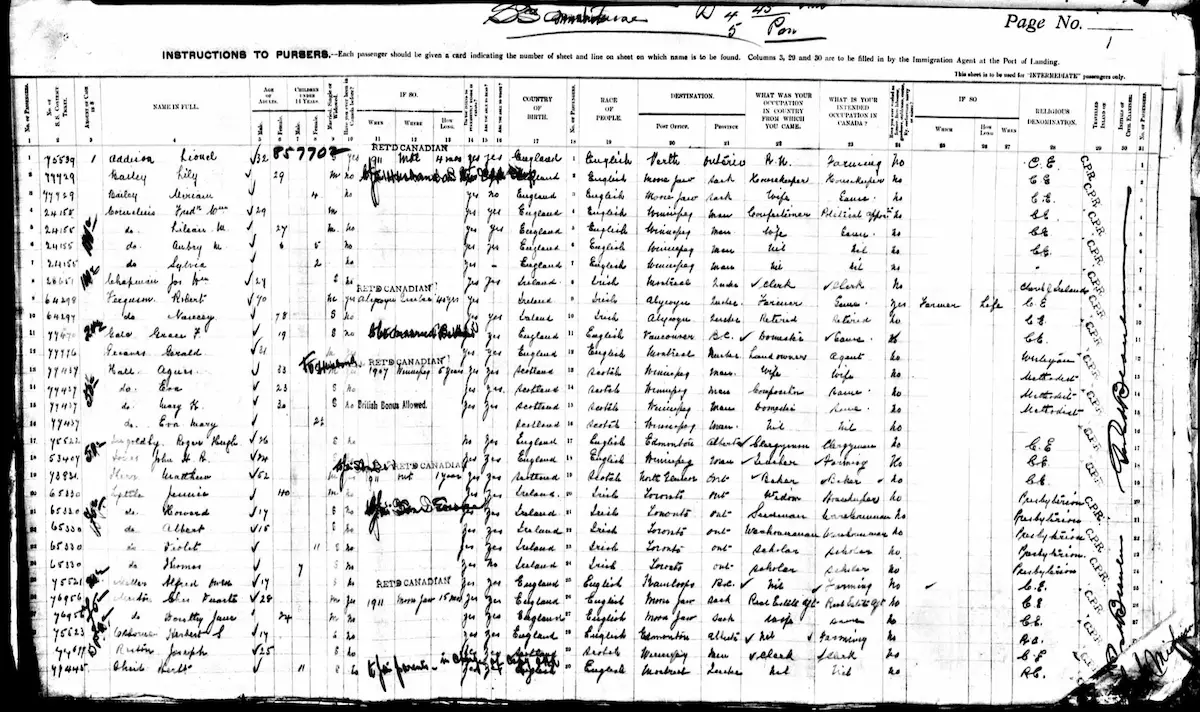
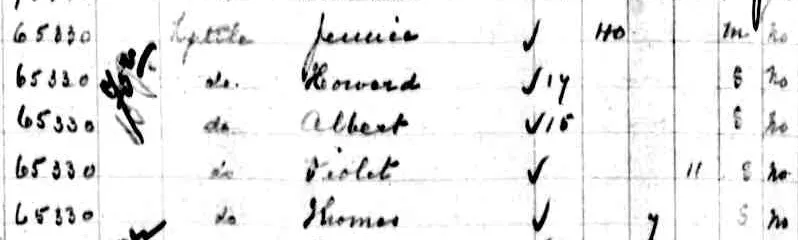
In the year since the census, both Jennie and Thomas seem to have adopted the surname Lyttle instead of Brown. Jennie was quite charitably listed as being 40 years of age (or maybe it says 46), although her birth certificate suggests she would have been turning 48 in about a month.
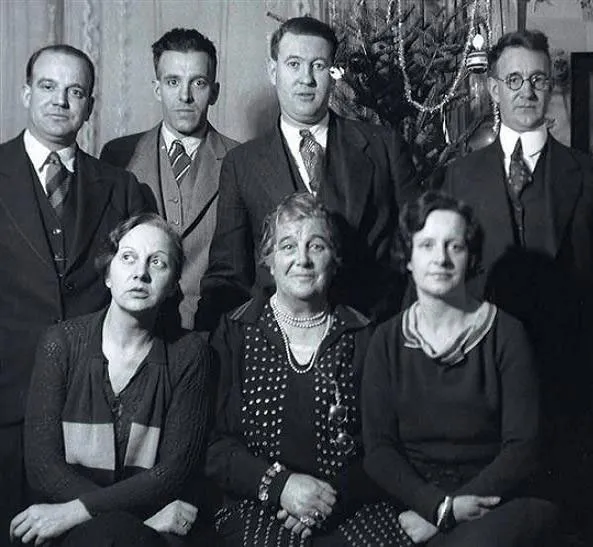
By June of 1912, the whole family was in North America, where they would stay for the rest of their lives. Here we see Howard, Albert, Tommy, James, Florence Jemima (Florrie Pat), Elisa Jane (Jenny), and Rachel Violet (Auntie Vi).
The New World
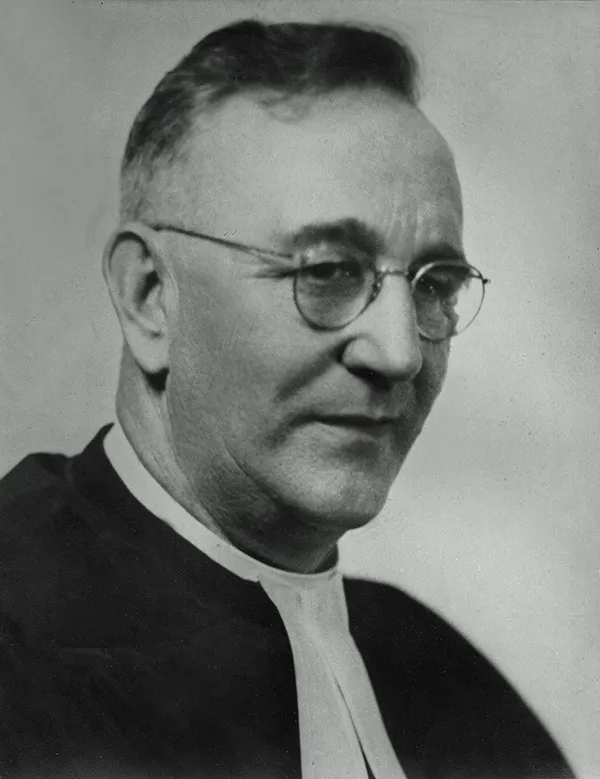
My grandfather (James Andrew Lyttle) studied the courses leading to a theology degree from Queens University by correspondence. In 1917, he was ordained as a Presbyterian minister at Hanbury (North of New Liskeard), where he was ministering to men in the logging and mining camps. Sometime around 1920, Sir Crawford would come to visit the family in Canada and give them the down payment for a house. In the summer of 1925, Congregationalists, Methodists, and most Presbyterians in Canada amalgamated to form the United Church of Canada, making my grandfather one its founding ministers.
The Rev. Lyttle met Marguerite Christina Cameron Brown, who was working in the chemical laboratory of Carnegie Mellon in Pennsylvania, at a Chautauqua event in 1925 and they were married 1926. They soon had my dad, James Cameron Lyttle. At that time, they lived in Capreol, one of the harsh mining towns of Northern Ontario. The Rev. Lyttle raised money to build a church. When the local theater closed down, he supported the church (and his own fascination with moving pictures) by buying a projector and running a weekly amateur movie theater in the basement of the church.
In 1932, he was the minister at Wexford Heights United Church in the Scarborough area, where they had another son, Ross Orville Lyttle. The Rev. Lyttle served as the secretary and, briefly, acting president of the Toronto Conference (headquarters) of the United Church of Canada. But by 1938 he was back in the Northland. He finally settled down in 1943, when he moved to 140 Lake Street in North Bay, Ontario. There, he took over as Superintendent of Home Missions for Northern Ontario and Quebec, a position he held until his retirement.
He was made an honorary Doctor of Divinity by Queen's University in 1951 and established his own local church in North Bay (Pinewood United Church) in 1960. Although officially retired, he served as director of church extension, president of Queens Theological Almumnae, a board member of the local Salvation Army, and chairman of the authorizing board of the Northern Ontario University Association. He fought to bring higher education to the Northland. He died at his home in February 1964, just days after receiving word that the funding had been secured to build a physical campus for Huntington University.
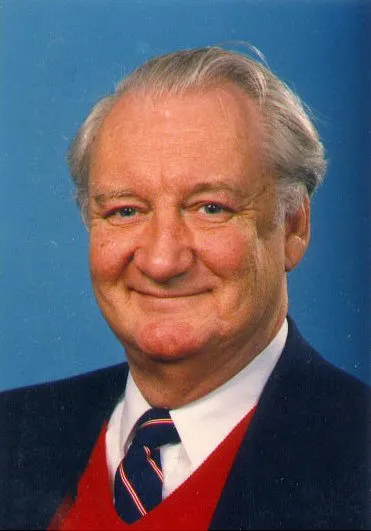
His elder son, James Cameron Lyttle, was my dad (pictured below). He worked at the local newspaper, the North Bay Nugget, and married my mom, Morna Margaret Glasheen in 1948. Shortly after my 1952 birth, they moved to Arlington Road in the Bathurst/St. Clair area of Toronto. He worked as an electrician at Toronto Type Foundry and would eventually (1959) earn a patent for a safety electronic eye that automatically shut machines off when a techmician's hands veered into unsafe areas.
 By 1955, we had bought a house at 166 Ellendale Drive in Scarborough, less than a mile and a half from Dr. Lyttle's Wexford Heights church. I gained three siblings while we lived in Toronto and then, in 1960/61 we returned to North Bay. The TTF company was dying out with the adent of cleaner technology, and my dad became an electrical inspector for the provincial utility, Ontario Hydro. He inspected and approved equipment changes as the Northland's power system moved from 25 Hz AC power to 60 Hz. Later, we moved back to Toronto so he could assume responsibility for applications of the electrical code, and there be become quite active im Royal Arch Masonry. He retired in 1992 and moved to Owen Sound, Ontario, where, in September of 2016, he passed away.
My dad's younger brother Ross Orville Lyttle was a high school guidance counselor and then the Registrar of Trinity Western University near Vancouver. He raised two great children including young Jack and the New York Times author Beth Lyttle, and was the source of the vast majority of the research for this story. He still resides in Burnaby, BC.
UPDATE: Current Homestead